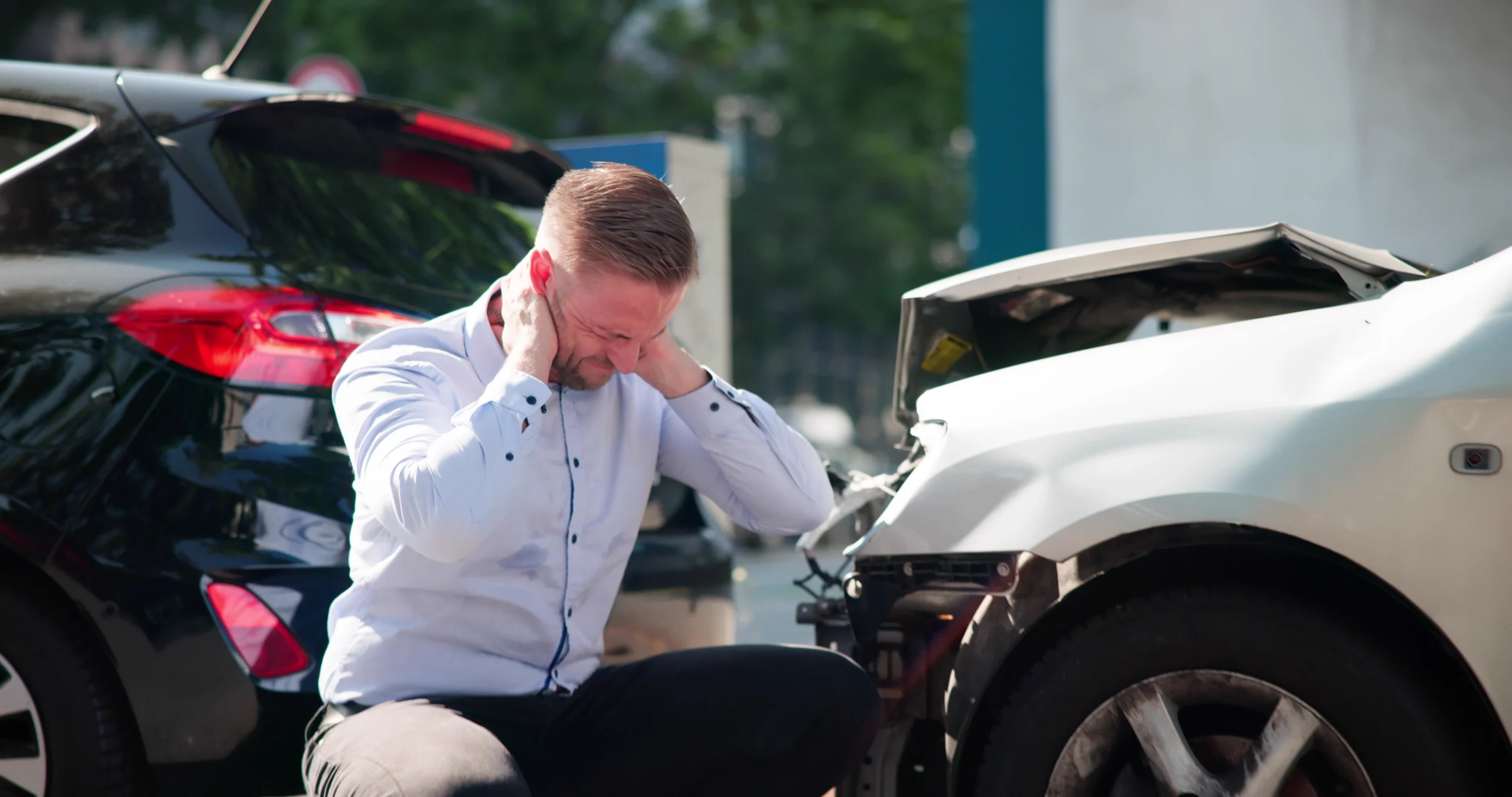
Yes, the best available research suggests uninsured drivers cause a disproportionate share of crashes. A peer-reviewed study of Swedish insurance claims from 2006 to 2010 found that the chance an uninsured driver was the one at fault was 34 percentage points higher than for an insured driver. The study measures the gap, not its causes, but related research points to five likely explanations. If one of these drivers hits you, your own uninsured motorist coverage is usually where the money has to come from.
That matters in Los Angeles, where the Insurance Research Council estimated that roughly one in five drivers had no insurance in 2023. Below, we look at why those drivers tend to be riskier, where the evidence is solid and where it is thin, and what it means for your claim.
Key Points
- Swedish claims data from 2006 to 2010 shows uninsured drivers were far more often the at-fault party.
- Five factors likely contribute: broader rule-breaking, deferred maintenance, fleeing the scene, the age and income profile of uninsured drivers, and financial stress.
- Some of these links rest on data; others are reasonable inferences not yet tested directly on uninsured drivers.
- Uninsured drivers rarely have assets to pay a judgment, so your own UM coverage is typically the main path to compensation.
- Your own insurer may contest a UM claim much like the other driver's insurer would, and disputes generally go to arbitration.
What the Research Actually Shows
No large U.S. dataset tracks crash rates by insurance status, so the clearest evidence comes from overseas.
The Swedish claims study
Sherzod Yarmukhamedov of the Swedish National Road and Transport Research Institute analyzed claim files from Sweden's motor insurers, covering 2006 through 2010, to see how drivers without coverage stacked up against insured ones. His study in the Journal of Transportation Safety & Security reported that:
- The likelihood of being the responsible driver was 34 percentage points higher for the uninsured.
- Within the uninsured group, drivers 25 to 34 carried the most risk.
- For the full driver population, cars at least 11 years old showed up as the at-fault vehicle more often than cars younger than 5.
Where the data falls short
- It is Swedish. We have not found similar peer-reviewed research using California crash data.
- It is dated. The records stop in 2010.
- It only covers crashes that happened. It shows who caused the collisions in the sample, not how often each group crashes overall.
- It shows a correlation. It does not prove why uninsured drivers are riskier.
The five reasons below pair that study with U.S. and California traffic-safety research. Where a reason rests on inference rather than direct proof, we say so.
Reason 1: Skipping Insurance Often Goes Along With Other Rule-Breaking
Someone willing to ignore California's insurance requirement may also be willing to ignore other traffic laws. No study we know of tests that exact connection in California, but closely related research points the same way.
Driving uninsured is not the same as driving without a valid license, although the two can overlap. A California DMV researcher who reviewed 23 years of the state's fatal crash data found that, compared with validly licensed drivers, those whose licenses were suspended or revoked were 160% more likely to be the at-fault driver in a fatal collision, and unlicensed drivers had 173% higher odds. Both groups were overrepresented as the responsible party in every year studied. Some had lost their privileges over reckless driving or a pile of tickets; others over non-driving issues such as unpaid child support.
Wouldn't a driver with something to hide be extra careful? Partly. Earlier research summarized in that same California study found suspended drivers tend to drive less and more cautiously to avoid police. Yet the fatal crash numbers still showed them at fault more often, year after year. Whatever extra caution they use does not close the gap.
Reason 2: Tight Budgets Lead to Deferred Repairs
When an insurance premium feels unaffordable, new tires and brake work tend to slide down the list too. Worn equipment usually seems fine until the moment it is needed most.
Picture a wet morning on the 10 when traffic suddenly bunches up. In wet-pavement testing by AAA and the Automobile Club of Southern California's Automotive Research Center, a passenger car on tires worn to 4/32 of an inch took an average of 87 additional feet to stop from highway speed compared with new tires, and its handling fell by about a third. That extra distance is longer than a full-size semi-trailer, enough to turn a near miss into a rear-end crash.
The Swedish study's finding about older vehicles applied to all drivers, and it did not measure maintenance. Plenty of insured drivers run on bald tires too. The link to uninsured drivers is an inference: putting off repairs is simply more likely when money is already short.
Reason 3: No Coverage Makes Fleeing More Tempting
Insured drivers flee crash scenes too. But the impulse is easy to understand for someone who knows no policy will pay for the damage and who may face penalties just for being on the road.
A March 2026 study from the AAA Foundation for Traffic Safety found that:
- In 2023, 15% of police-reported crashes involved a fleeing driver, the highest share in any recent year.
- About a quarter of the pedestrians killed that year, and nearly as large a share of cyclists, were struck by a driver who left the scene.
- Of the hit-and-run drivers in fatal crashes whose identities were known, 40% lacked a valid license, and over half were in a vehicle that was not registered to them.
AAA did not track insurance status. Still, when a driver already faces penalties for being unlicensed, uninsured, or both, staying at the scene can feel like volunteering for more trouble. The AAA research also found that the expectation of getting caught makes drivers less inclined to run.
Locally, LAPD figures show 290 traffic deaths within Los Angeles city limits in 2025, more than 150 of them pedestrians. In unincorporated county communities such as East Los Angeles and Florence-Firestone, Los Angeles County Department of Public Health data shows 30% of pedestrians killed between 2015 and 2024 were struck by drivers who fled. If you were hit while walking, learn more about pedestrian accident claims, and see our guide on what to do after a hit and run.
Reason 4: Age and Finances Overlap With Higher Crash Risk
The groups most likely to go without insurance overlap with groups that carry more crash risk, at least in the data that exists.
In the Swedish study, the 25-to-34 group carried more crash risk than uninsured drivers aged 65 and up. The differences between age groups were modest, and the author suggested younger drivers may simply have less skill, which tends to build with experience.
A TransUnion survey released in August 2026 asked drivers whether they had owned or driven a vehicle without insurance at some point during the prior six months. The share who said yes:
- Gen Z: 30%
- Millennials: 17%
- Gen X: 7%
- Baby Boomers: 1%
Two caveats: the answers are self-reported, and TransUnion's research excludes California data. Cost was not the only driver, either. Among uninsured Gen Z respondents, the most common answer (28%) was a decision not to renew; another 26% could not afford it, 22% simply forgot to pay, and 20% had been dropped by their insurer. Put inexperience, money pressure, and lapsed coverage together, and the Swedish results look less surprising.
Reason 5: Financial Stress May Pull Attention Off the Road
This is the least proven of the five. We know of no study testing it on uninsured drivers, so treat it as a hypothesis built on related research.
Think about the driver trying not to get pulled over: constantly scanning the mirror for patrol cars, braking hard at yellow lights, creeping along in the fast lane. Attention spent watching for police is attention taken away from traffic, and an abrupt stop can catch the driver behind off guard.
Stress itself matters too. A 2024 review of 61 driver-stress studies concluded that high stress adds mental load that can weaken attention, judgment, and decision-making, though it examined stress from traffic conditions rather than money. A widely cited 2013 experiment found lower-income participants did worse on reasoning and attention tasks after being prompted to think about a costly car repair; other researchers challenged how it handled income data, so treat it as suggestive. The basic idea is intuitive: someone merging onto the 110 at rush hour while worrying about rent may be thinking about bills instead of the brake lights ahead.
How Common Are Uninsured Drivers in California?
The Insurance Research Council put California's 2023 uninsured rate at 20.4%, placing the state eighth in the nation, against a national figure of 15.4%. Nationwide, the IRC's estimate rose from 11.6% in 2019 to 14.3% in 2020 before reaching that 15.4% mark.
That number measures prevalence, not crash risk. The IRC derives it from the ratio of uninsured motorist claims to bodily injury claims, so it shows how common uninsured drivers are, not how often they cause collisions.
What This Means If an Uninsured Driver Hits You
Knowing why these drivers crash more does not change the bottom line for the people they injure: the driver who caused the collision usually cannot pay for it. Our full guide to getting compensated after an uninsured driver collision walks through each recovery option. Here are the essentials.
The at-fault driver rarely has money to collect
Since January 1, 2025, California's minimum liability limits have been $30,000 for injury or death to one person, $60,000 for injury or death to more than one person, and $15,000 for property damage. A driver who skips even that seldom has savings or property to satisfy a judgment. You can still sue, and an asset search is worth doing, but the realistic source of payment is usually your own policy.
Your UM/UIM coverage is the safety net
California insurers must offer uninsured and underinsured motorist (UM/UIM) bodily injury coverage, which can only be declined through a signed written waiver. It stands in for the liability policy the other driver never bought and can pay for medical care, lost income, and pain and suffering, up to your limits. Uninsured motorist property damage (UMPD) coverage is separate and more limited, while collision coverage repairs your car no matter who was at fault.
Why your own insurer can become your opponent
Once you make a UM claim, your insurer steps into the at-fault driver's shoes and can raise the same arguments a defense lawyer would: that you share the blame, that your treatment went too far, or that your pain predates the crash. Our founder, Matthew Nezhad, spent years as a personal injury lawyer, and we have seen carriers use tools like insurance valuation software to set low ranges before negotiation even starts.
If you and your insurer cannot agree on fault or value, California law generally sends the dispute to arbitration rather than a jury. To protect the claim, within two years of the accident you generally must sue the uninsured driver, reach an agreement with your insurer, or formally demand arbitration. Under Proposition 103 rules, a UM claim for a crash you did not principally cause, which the California Department of Insurance describes as being 51% or more at fault, should not trigger an accident surcharge.
If you were the one driving uninsured
Under Proposition 213, now Civil Code section 3333.4, an uninsured driver, or the owner of an uninsured vehicle involved in the crash, generally cannot recover non-economic damages such as pain and suffering, even when the other driver was entirely at fault. Recovery is limited to economic losses like medical bills, lost wages, and property damage. An exception applies when the driver who caused the crash is convicted of DUI for that incident.
Talk to Oaks Law Firm
Uninsured drivers are more likely to cause crashes, and when they do, the people they hurt are often left negotiating with their own insurance company. Our team knows how insurers evaluate and minimize UM claims because we have seen that process from the inside, and we know where to look for every available source of coverage. We are based at 15233 Ventura Blvd, 5th Floor, in Koreatown and Central Los Angeles and help injured people across California.
If an uninsured or underinsured driver injured you, contact us for a free case review or call (877) 539-5366. You pay no attorney's fee unless we recover compensation for you.