The short answer
Pedestrians injured by drivers in California can recover compensation even if they were partly at fault, under pure comparative negligence. Drivers must yield to pedestrians in crosswalks (CVC § 21950). You generally have two years to file (CCP § 335.1). Seek medical care and preserve evidence immediately.
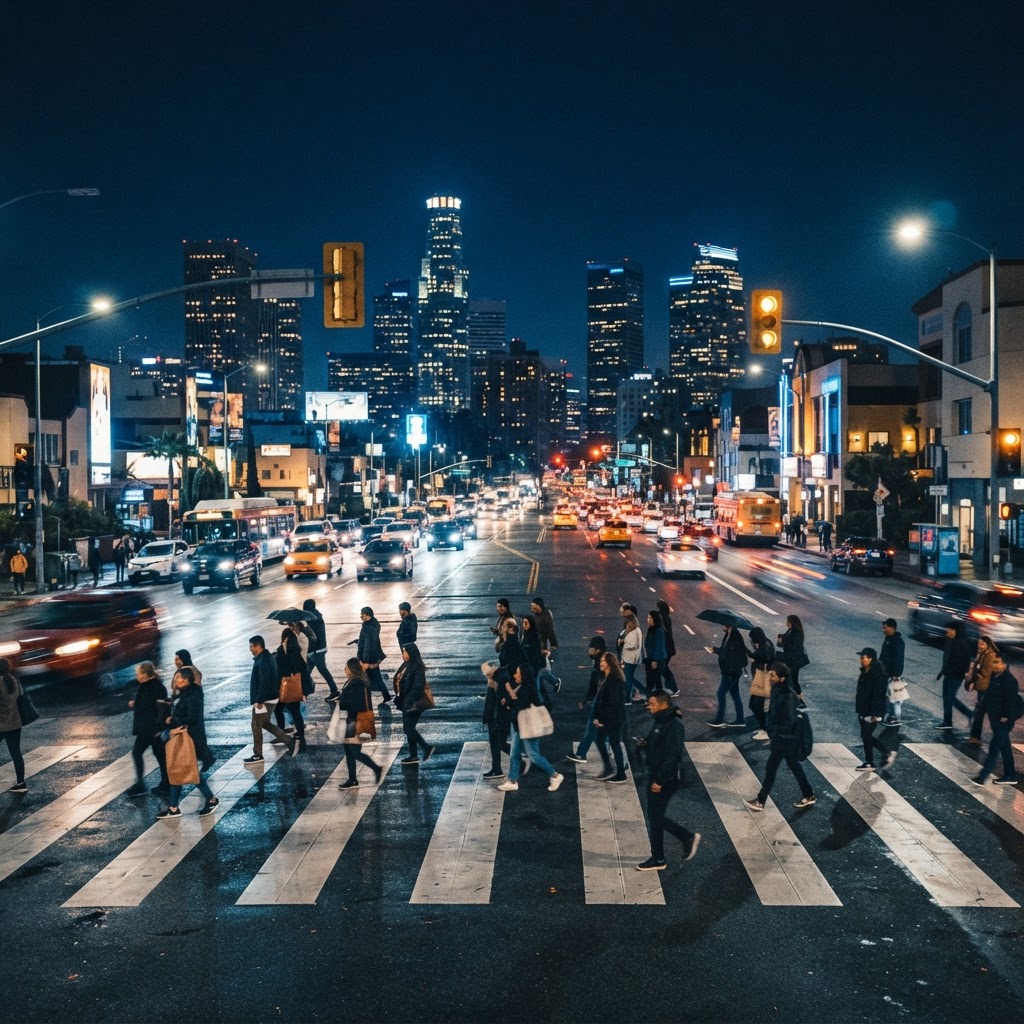
Los Angeles was not built for walking, but millions of people walk here every day, to bus stops on Vermont and Western, to work downtown, to school, and across wide boulevards where drivers treat the speed limit as a suggestion. When a vehicle strikes a pedestrian, there is nothing to absorb the impact. Injuries that would be minor inside a car can be life-changing for someone on foot, and the recovery can take months or years.
Pedestrian claims often seem clear-cut until the insurer gets involved. Drivers commonly say the pedestrian darted out, was looking at a phone, or crossed outside the crosswalk. When Our founding attorney has fought insurers for injured Californians since 2002. We now use that insider perspective to challenge those assertions with video, scene evidence, and witness accounts.
California law gives pedestrians important protections, including the right-of-way in marked and unmarked crosswalks, and drivers must exercise due care for pedestrians even outside crosswalks. If a dangerous road design, broken streetlight, or missing crosswalk contributed to the crash, a public entity may share responsibility, which triggers a strict six-month government claim deadline.
Your consultation is free, and you pay no attorney's fee unless we recover compensation for you. If you or a family member was hit while walking in Los Angeles, contact us so we can begin preserving evidence right away.
From the other side of the table
How the insurer's adjuster sees a pedestrian claim
Shifting blame to the pedestrian
Adjusters often look for any fact suggesting you were distracted, wearing dark clothing, or outside a crosswalk. We gather evidence of the driver's speed, attention, and sight lines to keep the focus on the driver's duty of care.
Leaning on the driver's version
When a pedestrian is seriously hurt, the driver's account may be the only one in the police report. We look for video from buses, businesses, and doorbell cameras, and for independent witnesses who can tell a fuller story.
Policy limits and coverage gaps
Serious pedestrian injuries often exceed the driver's liability limits. We identify all potential coverage, including your own auto policy's uninsured or underinsured motorist coverage, which may protect you even when you are on foot.
Minimizing future care
Insurers often value pedestrian claims based on immediate medical bills and overlook long-term needs. We work with treating providers to document future care, therapy, and limitations.
Why it happens
Common causes
Drivers failing to yield in crosswalks
Drivers turning right on red or turning left on green often fail to see pedestrians in crosswalks at busy intersections like Hollywood and Highland or Wilshire and Vermont.
Speeding on wide arterial streets
Multi-lane streets such as Sepulveda, Figueroa, and Sherman Way encourage high speeds, leaving drivers little time to stop for someone crossing.
Distracted driving
Drivers looking at phones or navigation screens may not notice a pedestrian until it is too late.
Poor lighting
Many pedestrian collisions happen after dark, when broken or inadequate streetlights make people on foot harder to see.
Backing vehicles
Drivers backing out of driveways and parking lots, including large delivery trucks, often strike pedestrians they did not check for.
Hit-and-run drivers
Pedestrian crashes are frequently hit-and-runs, leaving victims to rely on video, witnesses, and their own insurance coverage.
What we see
Injuries we handle
What you may recover
Compensation in a California claim
Medical care and rehabilitation
Hospital care, surgery, inpatient rehabilitation, physical and occupational therapy, and the cost of future treatment.
Lost income
Wages lost during recovery and reduced earning capacity when injuries limit your ability to work.
Pain, suffering, and emotional distress
The physical pain, fear, anxiety, and loss of independence that often follow a pedestrian injury.
Mobility and home needs
Wheelchairs, walkers, home modifications, and in-home help needed while you recover or permanently.
Wrongful death damages
For families who lose a loved one, compensation for lost support and companionship and for funeral expenses.
The rules that apply
California law you should know
Right-of-way in crosswalks
Drivers must yield the right-of-way to pedestrians crossing within any marked crosswalk or within any unmarked crosswalk at an intersection, and must reduce speed or take other action to protect pedestrian safety.
Vehicle Code § 21950
Pedestrians outside crosswalks
Pedestrians crossing outside a crosswalk must yield to vehicles close enough to be a hazard, but drivers still must exercise due care for the safety of any pedestrian on the roadway.
Vehicle Code § 21954
Government claim deadline
If a dangerous condition of public property, such as poor lighting or a hazardous crossing design, contributed to your injury, a written claim against the public entity generally must be presented within six months.
Government Code § 911.2
Pure comparative fault
Even if you share some responsibility, you may still recover damages reduced by your percentage of fault.
Li v. Yellow Cab Co. (1975) 13 Cal.3d 804
General information, not legal advice. Deadlines and rules depend on the facts of your case, so talk to an attorney promptly.
Right now
Protect your claim
Evidence to gather
- Photos of the crosswalk, signals, signs, lighting, and road markings
- Addresses of nearby businesses and homes with cameras
- Names and contact information for witnesses
- The driver's name, plate, and insurance information
- The police report number
- Your clothing and shoes from the day of the crash
- Medical records, imaging, and bills
- Your auto insurance declarations page, even if you were on foot
Mistakes insurers count on
- Assuming you have no claim because you were outside a crosswalk
- Overlooking your own uninsured or underinsured motorist coverage
- Missing the six-month deadline for claims involving public roads
- Waiting too long to request surveillance footage
- Giving a statement to the driver's insurer while still in the hospital
Step by step
How we handle your case
- 1
Free consultation
We talk with you or your family, often at the hospital or at home if you cannot travel, and review what is known about the crash.
- 2
Preserve video and witness evidence
We canvass for business, bus, and doorbell camera footage and contact witnesses before the evidence disappears.
- 3
Investigate the roadway
We examine crosswalk markings, signal timing, lighting, and sight lines, and we evaluate whether a public entity may share responsibility.
- 4
Identify all insurance
We look at the driver's policy, any employer's coverage, and your own uninsured and underinsured motorist coverage.
- 5
Pursue fair compensation
We present your claim with complete documentation of your injuries and future needs and file suit if necessary.
From the Case Vault
Related results
Past results do not guarantee a similar outcome. Every case is different and must be evaluated on its own facts.
Straight answers
Frequently asked questions
Not always, but often. Under Vehicle Code § 21950, drivers must yield to pedestrians in marked and unmarked crosswalks at intersections. Outside crosswalks, pedestrians generally must yield to approaching vehicles, but drivers still have a duty to use due care. Even when a pedestrian did not have the right-of-way, the driver may still bear significant fault.
Vehicle Accidents