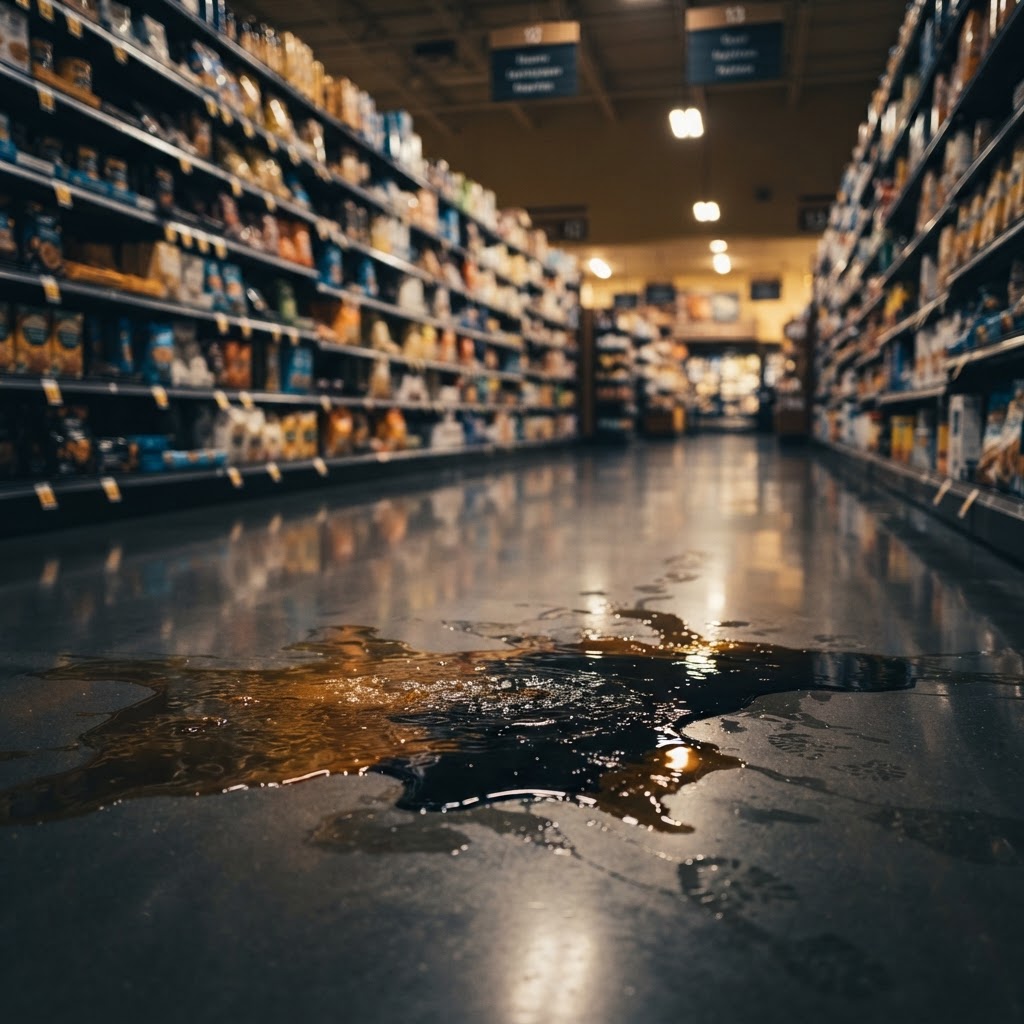
The short answer
Slip and fall victims in California can recover compensation if the property owner knew or should have known of the dangerous condition. You generally have two years to file (CCP § 335.1). Report the incident, photograph the hazard, seek medical care, and consult a lawyer before speaking to the insurer.
A slip and fall can look minor to a bystander and still change your life. A fall on a wet floor at a grocery store in Pico-Union, a spilled drink in a food court at the Beverly Center, a leaking cooler at a big-box store in the Valley, or a slick lobby floor during one of Los Angeles's rare rainstorms can cause fractured hips, torn rotator cuffs, spinal injuries, and head trauma. Older adults are especially vulnerable, and a single fall can mean surgery and months of rehabilitation.
California law requires property owners and businesses to use reasonable care to keep their premises safe. That does not make them automatically responsible for every fall. In most slip and fall cases, the decisive question is notice: did the business create the hazard, know about it, or have it sitting there long enough that a reasonable inspection would have caught it? The answer usually lives in surveillance video, sweep logs, and employee testimony that the business controls.
Our founding attorneys worked as personal injury attorneys and in-house for a major insurer. We know how retail and commercial property insurers defend these claims, often through third-party administrators that move fast to collect a statement and close the file. We move just as fast to preserve the video and records that show how long the hazard was there.
Consultations are free, and you pay no attorney's fee unless we recover compensation for you. If you fell at a store, restaurant, apartment building, or other property in Los Angeles County, call us before you speak with the owner's insurer.
From the other side of the table
How the insurer's adjuster sees your slip-and-fall claim
The sweep log defense
Large retailers keep inspection or sweep logs, and their adjusters lead with them: the aisle was checked minutes before, so there was no time to find the spill. We demand the underlying video and logs for the full period, not just the entries the store chooses to share, and we look for inconsistencies between the records and what the camera shows.
Video that 'wasn't retained'
Many surveillance systems overwrite footage within days or weeks. If no one asks, only the clip that helps the store may be saved. We send preservation letters immediately, demanding footage from before the fall, the fall itself, and the aftermath, which can show how long a hazard existed and how employees responded.
Blaming your shoes and your attention
Adjusters ask about your footwear, whether you were on your phone, and whether you were watching where you walked. We gather witness statements and document the hazard's visibility, lighting, and location so a normal shopper's behavior is not recast as carelessness.
Treating the fall as 'just a bruise'
Insurers assume falls produce minor injuries, particularly when you walked away. Hip, wrist, knee, and back injuries often worsen over days. We coordinate your medical records to show the connection between the fall and the diagnosis, including aggravation of prior conditions.
Why it happens
Common causes
Spills in grocery and big-box stores
Leaking produce misters, broken bottles, and dropped items in supermarkets and warehouse stores are classic hazards, particularly when aisles are not inspected regularly.
Wet entryways during rain
When rare Los Angeles rains arrive, store and office lobbies without mats or warning signs become slick very quickly.
Restaurant and food court floors
Grease, ice, and spilled drinks in restaurants and food courts at shopping centers create slippery surfaces in high-traffic areas.
Uneven flooring and torn carpet
Raised floor tiles, torn carpet, and changes in floor height in older buildings cause trips that owners should repair or mark.
Apartment stairways and walkways
Worn stair treads, broken handrails, and leaking pipes in apartment complexes in neighborhoods like Koreatown and Westlake cause falls that landlords may be responsible for.
Sidewalks and parking lots
Cracked pavement, potholes, and poor lighting in parking lots and on sidewalks can cause trip-and-fall injuries. Public sidewalks involve special claim rules.
What we see
Injuries we handle
What you may recover
Compensation in a California claim
Medical bills
Emergency room care, imaging, surgery, physical therapy, and future treatment reasonably required because of the fall.
Lost wages
Income lost while you recover, and reduced earning capacity if your injuries limit the work you can do.
Pain and suffering
Compensation for physical pain, emotional distress, and loss of enjoyment of life.
Home care and assistance
Reasonable costs of help with daily tasks, mobility aids, and home modifications during recovery.
Loss of independence
For many older adults, a fall means losing the ability to live independently. The effect on daily life is part of the non-economic harm California law allows you to recover.
The rules that apply
California law you should know
Constructive notice
A store owner may be liable if a dangerous condition existed long enough that it would have been discovered and remedied through reasonable inspections. Plaintiffs may use circumstantial evidence to show this.
Ortega v. Kmart Corp. (2001) 26 Cal.4th 1200
General duty of care
Property owners must use ordinary care in managing their property to avoid exposing others to an unreasonable risk of harm.
Cal. Civ. Code § 1714
Pure comparative fault
If you were partly responsible for your fall, you can still recover, reduced by your share of fault.
Li v. Yellow Cab Co. (1975) 13 Cal.3d 804
Filing deadline
Most slip and fall lawsuits must be filed within two years. Falls on public property usually require a government claim within six months.
Cal. Code Civ. Proc. § 335.1; Cal. Gov. Code § 911.2
General information, not legal advice. Deadlines and rules depend on the facts of your case, so talk to an attorney promptly.
Right now
Protect your claim
Evidence to gather
- Photos of the floor, the substance, and the surrounding area
- Photos showing whether warning signs or mats were present
- The incident report or a note of the manager's name
- Witness names and contact information
- Receipts showing the date and time you were at the store
- The shoes and clothing you wore, especially if stained
- Locations of cameras near where you fell
- Medical records from your first visit onward
Mistakes insurers count on
- Saying 'I'm fine' at the scene and leaving without an incident report
- Signing a store incident form without reading it carefully
- Giving a recorded statement to the store's claims administrator
- Waiting weeks to see a doctor
- Waiting to contact a lawyer until after surveillance footage is overwritten
Step by step
How we handle your case
- 1
Free case review
We learn where and how you fell, what you saw, and what you reported, and we explain whether the evidence suggests a viable claim.
- 2
Preservation letters
We immediately request that the owner preserve surveillance video, inspection logs, incident reports, and employee information.
- 3
Investigate notice
We look for evidence of how long the hazard existed, prior complaints, similar incidents, and whether employees followed inspection policies.
- 4
Document your injuries
We gather medical records and bills, and we work with your providers to connect your injuries to the fall.
- 5
Negotiate or litigate
We present the claim to the insurer and, if necessary, file suit to obtain the video and records through formal discovery.
From the Case Vault
Related results
Past results do not guarantee a similar outcome. Every case is different and must be evaluated on its own facts.
Straight answers
Frequently asked questions
No. California does not make property owners insurers of their customers' safety. You generally must show that the owner created the hazard, knew about it, or should have discovered it through reasonable inspection. That is why evidence like video and inspection records is so important. The good news is that notice can be proven with circumstantial evidence, such as the condition of a spill.
Premises Liability