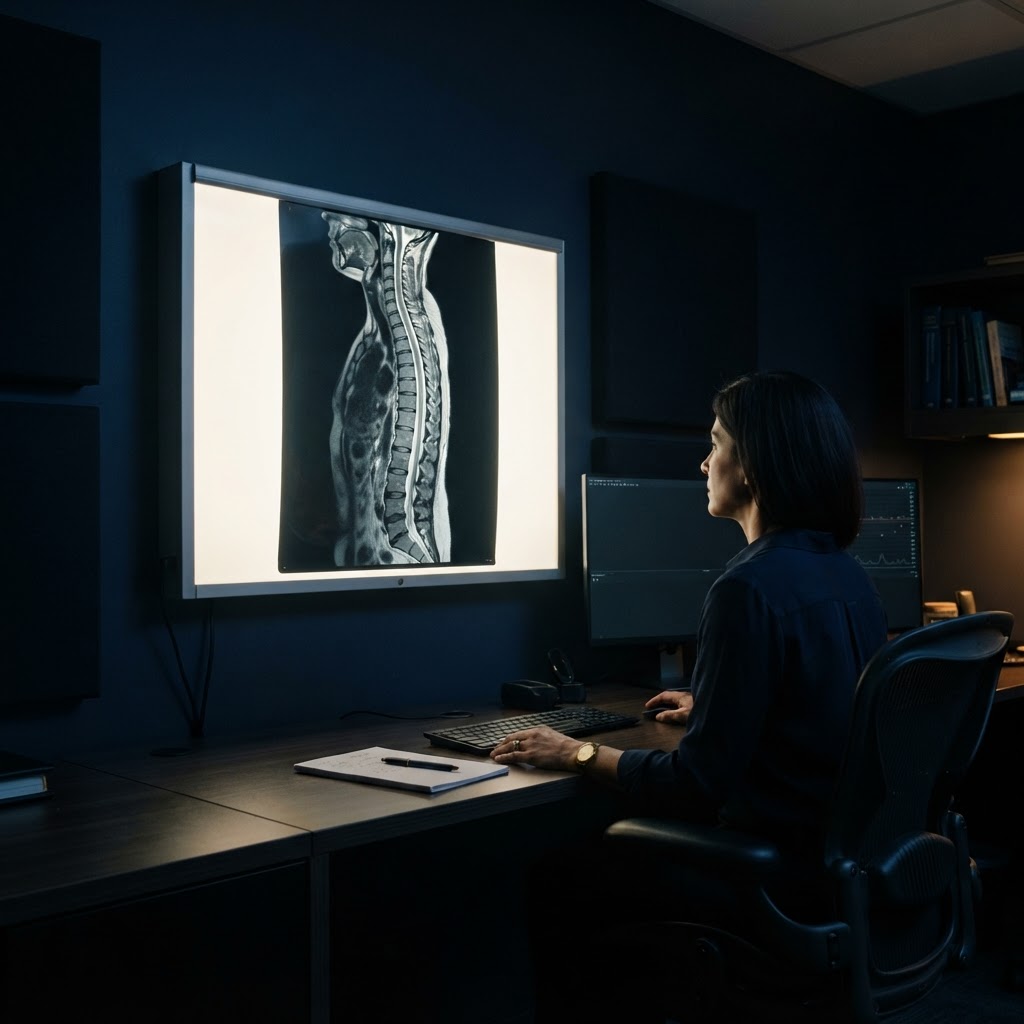
The short answer
Spinal cord injuries in California can cause paralysis and lifelong disability. Victims can recover compensation for medical care, rehabilitation, lost earning capacity, and pain and suffering. You generally have two years to file (CCP § 335.1). Seek immediate medical care and consult a lawyer promptly.
Your spine carries your body's weight and protects the nerves that control movement, sensation, and organ function. An injury to it can range from a herniated disc that makes sitting or lifting painful to a spinal cord injury that causes partial or complete paralysis. Either way, the effects can reshape your work, your independence, and your family's future. Across Los Angeles County, serious spine injuries often follow high-speed freeway crashes, falls from heights, truck collisions, and pedestrian impacts.
Our founding attorney has fought insurers for injured Californians since 2002. We know that spine claims are among the most heavily contested categories on the defense side. Adjusters routinely review MRIs for signs of degeneration, question the need for surgery, and hire physicians to testify that your symptoms would have developed anyway. We use that knowledge to build your case around the evidence that answers those arguments.
Spinal cord injuries in particular carry enormous lifetime costs: surgery and inpatient rehabilitation, wheelchairs and mobility equipment, accessible housing and vehicles, attendant care, and treatment for complications such as pressure injuries and infections. Disc and vertebral injuries can require injections, fusion surgery, and years of pain management. We work with treating surgeons, physiatrists, life-care planners, and economists to put a documented figure on those needs.
If you have suffered a back or neck injury that is not getting better, or a family member is facing paralysis after an accident, we can help you understand your options. We can meet at our Wilshire Boulevard office, by phone or video, or at your home or hospital bedside when mobility is limited, and we will explain the process in plain terms. Consultations are free, and you pay no attorney's fee unless we recover compensation for you.
From the other side of the table
How the insurer's adjuster sees your claim
Degeneration is the default defense
Most adults show some disc degeneration on an MRI. Insurers commonly use this to argue the crash did not cause your injury. We work with your treating doctors to distinguish preexisting findings from new trauma, and to show how an accident can turn a condition that never bothered you into a painful, disabling one.
Surgery recommendations get second-guessed
When a surgeon recommends a fusion or disc replacement, the defense may retain a physician who calls it unnecessary. Consistent records showing failed conservative care, objective findings, and a clear treatment rationale help counter that approach.
Lien-based treatment draws scrutiny
If you treated with providers who agreed to be paid from your settlement, insurers often argue the bills are inflated. We anticipate this challenge and work to support the reasonableness of your care and its cost.
Paralysis claims are valued by the life-care plan
For spinal cord injuries, the life-care plan often drives the claim's value. The defense will prepare its own plan with fewer hours of care and cheaper equipment. We work to ensure yours is thorough, realistic, and tied to your physicians' recommendations.
Why it happens
Common causes
Rear-end and T-bone collisions
Sudden impacts can cause whiplash, herniated discs, and vertebral fractures, especially when a vehicle is struck at an intersection or at freeway speed.
Rollovers and high-speed crashes
Rollovers and roof crush can compress the spine and cause the kind of fractures and dislocations that injure the spinal cord.
Falls from heights
Falls from ladders, roofs, balconies, and scaffolds are a common cause of burst fractures and spinal cord damage.
Commercial truck collisions
The force of a collision with a tractor-trailer or heavy delivery truck can cause severe spinal trauma to occupants of smaller vehicles.
Pedestrian and motorcycle impacts
Without the protection of a vehicle frame, pedestrians and riders are especially vulnerable to spinal fractures and cord injuries.
Diving and swimming pool incidents
Shallow water without adequate warnings or depth markings can lead to cervical spine injuries, sometimes raising premises liability issues.
What we see
Injuries we handle
What you may recover
Compensation in a California claim
Medical, surgical, and rehabilitation costs
Emergency care, spine surgery, inpatient rehabilitation, physical therapy, injections, medications, and future procedures your physicians anticipate.
Mobility equipment and accessibility changes
Wheelchairs, lifts, hospital beds, home modifications, and accessible vehicles, along with the cost of replacing that equipment over time.
Attendant and in-home care
The cost of professional caregivers or the value of care provided by family members for bathing, dressing, transfers, and other daily needs.
Lost earnings and earning capacity
Income lost during recovery and the long-term impact of physical restrictions on your ability to work in your chosen field.
Pain, suffering, and loss of enjoyment of life
Compensation for chronic pain, emotional distress, loss of independence, and activities you can no longer enjoy, as well as a spouse's potential loss of consortium claim.
The rules that apply
California law you should know
Statute of limitations
Most spinal injury lawsuits must be filed within two years of the date of injury. Missing the deadline can end your right to recover.
Cal. Code Civ. Proc. § 335.1
Government claim deadline
When a public entity may be responsible, such as for a poorly maintained road or a government-owned vehicle, a written claim generally must be presented within six months.
Cal. Gov. Code § 911.2
Measure of damages
A person injured by another's negligence may recover the amount that will compensate for all detriment proximately caused, including future losses that are reasonably certain to occur.
Cal. Civ. Code § 3333
General information, not legal advice. Deadlines and rules depend on the facts of your case, so talk to an attorney promptly.
Right now
Protect your claim
Evidence to gather
- All MRI, CT, and X-ray images and radiology reports
- Records of any prior back or neck treatment, which help separate old from new findings
- Photos of vehicle damage and the accident scene
- Surgical recommendations and operative reports
- Physical therapy notes showing progress and limitations
- Employment records and physician work restrictions
- Receipts for equipment, medications, and home modifications
- A journal of pain levels and daily limitations
Mistakes insurers count on
- Assuming neck or back pain will simply go away and waiting to see a doctor
- Failing to tell your doctors about prior back problems, which can damage credibility later
- Signing medical authorizations that give the insurer access to your entire medical history
- Lifting, exercising, or working beyond your restrictions, especially if it could be photographed
- Accepting a settlement before your surgeon has determined whether you need surgery
Step by step
How we handle your case
- 1
Free consultation and immediate protection
We review what happened, explain your rights, and take over communications with insurers so you can focus on treatment.
- 2
Investigate the incident
We gather crash reports, scene evidence, vehicle data, and witness accounts, and send preservation letters to parties who may hold video or records.
- 3
Build the medical picture
We collect imaging and surgical records and work with your physicians to document how the incident caused or worsened your spinal condition.
- 4
Quantify lifetime needs
For serious injuries, we coordinate life-care planning and economic analysis to capture future surgeries, equipment, care, and lost earning capacity.
- 5
Negotiate or litigate
We present a claim designed to answer the defense arguments we know are coming. If the insurer refuses to be reasonable, we are prepared to file suit.
From the Case Vault
Related results
Past results do not guarantee a similar outcome. Every case is different and must be evaluated on its own facts.
Straight answers
Frequently asked questions
A spine injury involves the bones, discs, ligaments, or muscles of the back and neck, such as a herniated disc or vertebral fracture. A spinal cord injury involves damage to the bundle of nerves inside the spinal column and can cause loss of movement or sensation below the injury. Both can be serious, but spinal cord injuries typically involve far greater lifetime care needs.
Catastrophic Injury & Death