The short answer
Rideshare accidents in California involve complex layers of insurance—the driver's personal policy and Uber or Lyft's commercial policy. You can recover compensation as a passenger, driver, or third party. You generally have two years to file (CCP § 335.1). Report the crash in the app and consult a lawyer promptly.
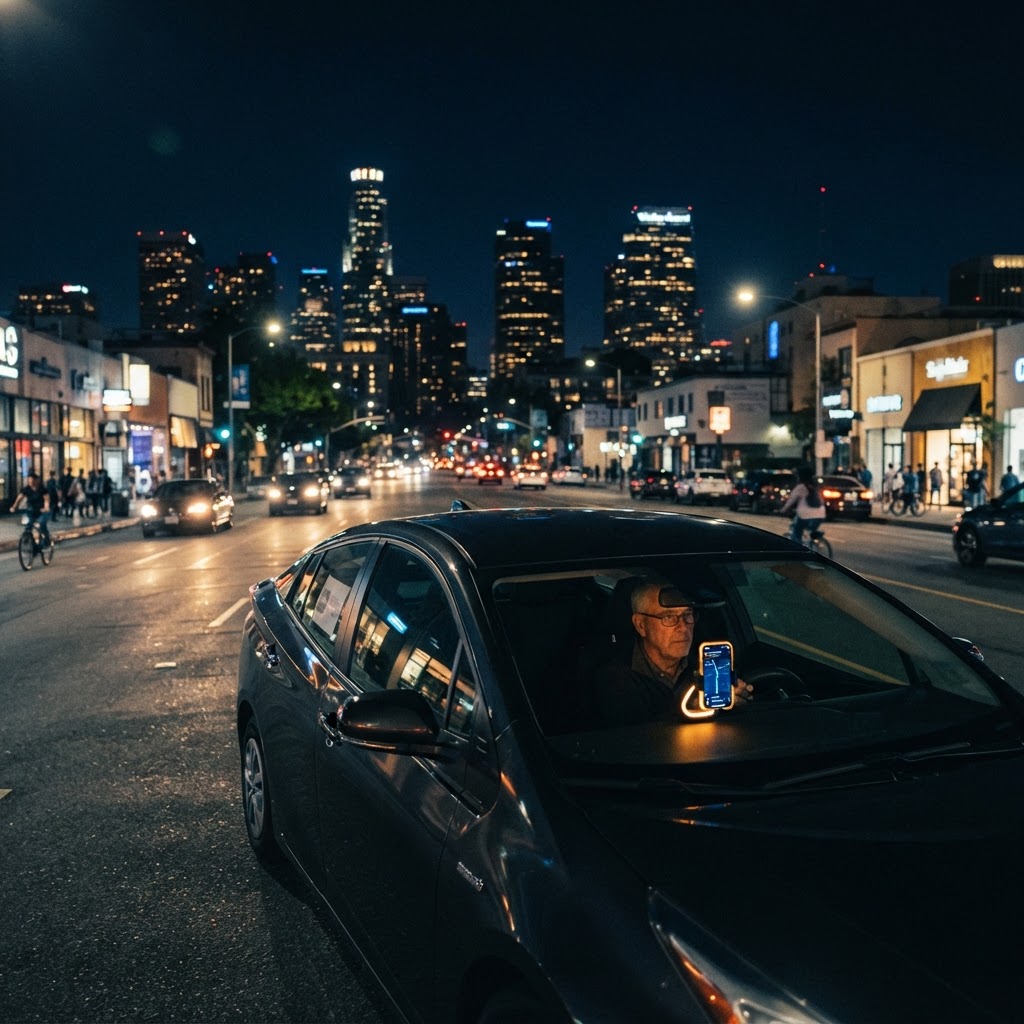
Uber and Lyft are woven into daily life in Los Angeles. Riders take them to LAX, to Dodger games, home from nights out in West Hollywood, and across town to avoid parking downtown. Drivers spend hours on the 405, the 101, and surface streets like La Cienega and Venice Boulevard. With that much time on the road, rideshare collisions are common, and the insurance questions they raise are more complicated than an ordinary car crash.
Who pays in a rideshare crash depends heavily on the driver's app status at the moment of impact. Was the app off? Was the driver logged in and waiting for a request? Had the driver accepted a trip, or was a passenger in the car? Each status can trigger different insurance, and the driver's personal carrier and the rideshare company's commercial insurer may each argue that the other should pay. That kind of finger-pointing delays claims and frustrates injured people.
Before representing injured people, our founding attorneys worked in injury-law and in-house for a major auto carrier. We understand how coverage disputes are argued and how commercial policies are administered. We gather the trip data, app records, and policy information needed to establish which coverage applies, and we pursue the claim against the right insurer from the start.
Your consultation is free, and you pay no attorney's fee unless we recover compensation for you. Whether you were a passenger, a rideshare driver, another motorist, a pedestrian, or a cyclist, we can help you understand your options.
From the other side of the table
How rideshare insurers see your claim
Disputing the driver's app status
Coverage often turns on whether the driver was offline, waiting for a request, or on an active trip. We seek the trip records, timestamps, and app data needed to lock down the driver's status at the time of the crash.
Personal policy exclusions
Many personal auto policies exclude coverage when the vehicle is used for commercial ride-hailing. The personal carrier may deny the claim and point to the commercial policy. We track these denials and make sure the correct policy responds.
Independent contractor defenses
Rideshare companies classify drivers as independent contractors to limit the company's direct liability. We focus on the insurance the law requires them to maintain and on any conduct that may create additional responsibility.
Third-party administrators and delay
Rideshare claims are often handled by third-party claims administrators, which can slow communication. We keep pressure on the claim and document every delay.
Why it happens
Common causes
Distraction from the app
Drivers checking navigation, accepting new requests, or reading rider messages can take their eyes off the road at critical moments.
Sudden stops for pickups and drop-offs
Rideshare drivers often stop abruptly in traffic lanes, bike lanes, or red zones in busy areas like Hollywood, Santa Monica, and downtown, causing rear-end and dooring collisions.
Fatigue from long shifts
Drivers may work long hours, including late-night shifts, which can reduce alertness and reaction time.
Unfamiliar routes
Following turn-by-turn directions through unfamiliar neighborhoods can lead to illegal turns, missed signals, and sudden lane changes.
Airport and venue congestion
Crowded pickup zones at LAX, SoFi Stadium, the Hollywood Bowl, and other venues create chaotic conditions where collisions and pedestrian strikes are more likely.
Other drivers hitting the rideshare vehicle
Many rideshare crashes are caused by third parties, and the rideshare passenger may need to claim against that driver as well as the rideshare coverage.
What we see
Injuries we handle
What you may recover
Compensation in a California claim
Medical expenses
Emergency care, follow-up treatment, therapy, and future care connected to your injuries.
Lost wages
Income lost while you recovered, including gig or self-employment income for rideshare drivers who are injured.
Pain and suffering
Physical pain, emotional distress, and the disruption the crash caused to your life.
Property damage
Damage to your vehicle, bicycle, phone, or other personal property.
Claims for injured rideshare drivers
Injured drivers may have claims against at-fault third parties, as well as possible benefits under coverage the rideshare company provides for drivers.
The rules that apply
California law you should know
Rideshare insurance requirements
California requires transportation network companies and their drivers to maintain specific insurance. During an active trip, from acceptance of a ride until the passenger exits, at least one million dollars in liability coverage is required. Lower coverage applies when the driver is logged in and waiting for a request.
Public Utilities Code § 5433
Duty of reasonable care
Rideshare drivers, like all drivers, must use reasonable care and are responsible for harm caused by their negligence.
Civil Code § 1714
Pure comparative fault
If more than one driver was at fault, responsibility is divided according to each party's share of fault, and you can recover even if you share some blame.
Li v. Yellow Cab Co. (1975) 13 Cal.3d 804
Two-year injury deadline
Most rideshare injury lawsuits must be filed within two years of the crash.
Code of Civil Procedure § 335.1
General information, not legal advice. Deadlines and rules depend on the facts of your case, so talk to an attorney promptly.
Right now
Protect your claim
Evidence to gather
- Screenshots of the ride in the app, including driver name, vehicle, and trip times
- Your ride receipt and any in-app messages
- Photos of the vehicles, the scene, and your injuries
- Names and contact information of the rideshare driver and any other drivers
- Witness names and phone numbers
- The police report number
- Any report you submitted through the Uber or Lyft app
- Medical records and bills
Mistakes insurers count on
- Failing to screenshot trip details before they become harder to access
- Assuming the rideshare company will handle your claim fairly on its own
- Accepting the driver's personal insurer's denial as the final word
- Giving a recorded statement to a claims administrator without advice
- Waiting to seek medical care because you were only a passenger
Step by step
How we handle your case
- 1
Free consultation
We gather the basic facts, including your role in the crash and what you know about the driver's app status.
- 2
Secure trip and app records
We document screenshots, ride receipts, and trip details and request records confirming the driver's status at the time of the crash.
- 3
Identify all coverage
We determine which policies may apply, including the rideshare company's commercial coverage, the driver's personal policy, any third-party driver's insurance, and your own coverage.
- 4
Build your damages file
We collect medical records, bills, and proof of lost income and present them in a clear, organized demand.
- 5
Negotiate or file suit
We pursue the responsible insurers and, if necessary, file a lawsuit to protect your rights.
From the Case Vault
Related results
Past results do not guarantee a similar outcome. Every case is different and must be evaluated on its own facts.
Straight answers
Frequently asked questions
As a passenger on an active trip, you are typically covered by the rideshare company's commercial policy, which California requires to provide at least one million dollars in liability coverage under Public Utilities Code § 5433. If another driver caused the crash, their insurance may also be responsible. Passengers are rarely at fault, so the key questions are usually which insurer responds and how your damages are valued.
Vehicle Accidents