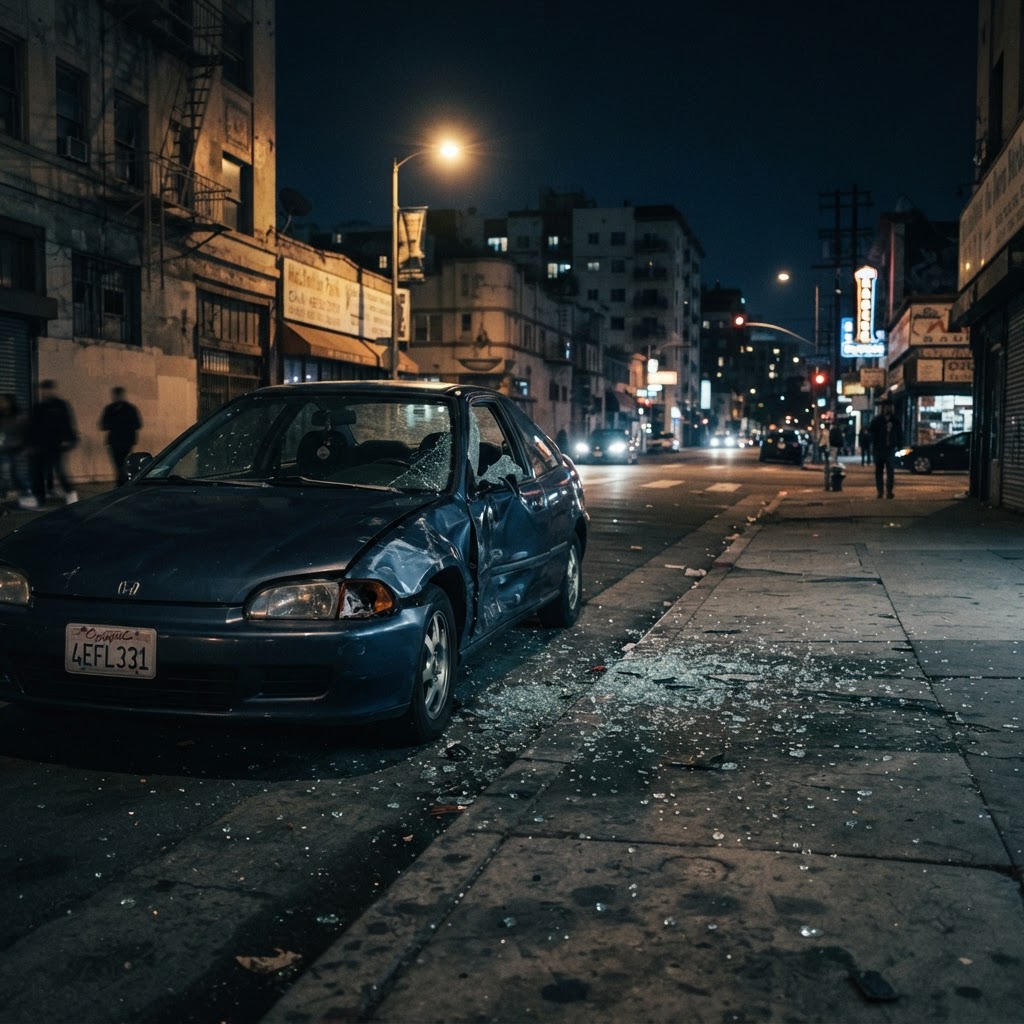
The short answer
If you are injured in a hit-and-run in California, you can still recover compensation through your own uninsured motorist (UM) coverage, even if the at-fault driver is never found. Report the crash to police within 24 hours and notify your insurer promptly. An attorney can identify every available coverage source.
Being injured by a driver who speeds away is frightening and infuriating. You are left with injuries, a damaged car, and no one to hold responsible in the moment. Hit-and-run crashes are a persistent problem across Los Angeles, from late-night collisions on Crenshaw and Vermont to sideswipes on the 110 and pedestrians struck in neighborhood crosswalks. The good news is that a fleeing driver does not automatically mean there is no path to compensation.
In many hit-and-run cases, the main source of recovery is your own uninsured motorist coverage. That surprises people, and it also creates a trap. Your insurer is supposed to treat you fairly, but on an uninsured motorist claim it is effectively standing in the shoes of the driver who hit you, and it has every financial reason to pay as little as possible. Our founding attorney has fought insurers for injured Californians since 2002.
California's uninsured motorist rules include strict conditions for hit-and-run claims, including prompt reporting to police and your insurer and, generally, physical contact with the unidentified vehicle. Missing one of these steps can jeopardize coverage. At the same time, we work to identify the driver through video, license plate information, witnesses, and repair shop leads, because finding them can open additional insurance.
Your consultation is free, and you pay no attorney's fee unless we recover compensation for you. If you were hurt by a driver who fled, call us quickly so critical reporting deadlines and evidence are not lost.
From the other side of the table
How your own insurer sees a hit-and-run claim
Checking every policy condition
Uninsured motorist adjusters review whether you reported the crash to police and notified the carrier on time and whether there was physical contact. We make sure these requirements are satisfied and documented from the start.
Questioning whether a hit-and-run happened at all
Insurers sometimes suspect a single-car crash is being described as a hit-and-run. Paint transfer, damage patterns, video, and witnesses help establish that another vehicle was involved.
Treating you as an adversary in arbitration
Many uninsured motorist disputes are resolved in arbitration, where your insurer is represented by defense counsel. We prepare these cases with the same rigor as a lawsuit because that is how the carrier prepares them.
Offsetting and limiting benefits
Carriers may try to reduce payments by applying credits for medical payments coverage or other benefits. We review your policy language and California law to make sure deductions are applied correctly.
Why it happens
Common causes
Uninsured or unlicensed drivers
Drivers with no insurance, suspended licenses, or immigration fears sometimes flee rather than face consequences, leaving injured people to rely on their own coverage.
Impaired drivers
A driver under the influence may leave the scene to avoid arrest, particularly late at night near nightlife areas in Hollywood, downtown, and along Sunset Boulevard.
Pedestrian and cyclist strikes
Many hit-and-runs involve people on foot or on bikes, often in poorly lit crosswalks or on busy corridors where the driver speeds away before anyone can get a plate.
Freeway sideswipes
A driver who clips your car while changing lanes on the 10, the 405, or the 5 may keep going, sometimes without realizing or admitting the contact.
Parking lot and street-parking collisions
Drivers who strike parked cars or people loading vehicles and then leave are common in crowded neighborhoods and shopping centers.
Stolen or unregistered vehicles
Drivers operating stolen cars or vehicles with fake plates have strong incentives to flee, making identification more difficult.
What we see
Injuries we handle
What you may recover
Compensation in a California claim
Medical expenses
Emergency treatment, hospital care, surgery, therapy, and future medical needs, subject to the limits of available coverage.
Lost wages
Income lost while you recovered and reduced earning capacity if your injuries affect your ability to work.
Pain and suffering
Physical pain and the emotional impact of the crash, including fear and anxiety that often follow being struck and left behind.
Property damage
Vehicle repairs and related losses, which may be covered through collision coverage or, in some circumstances, uninsured motorist property damage coverage.
Claims against the driver if identified
If the driver is found, you may pursue their liability insurance and personal assets, and in egregious cases punitive damages may be available.
The rules that apply
California law you should know
Drivers must stop after an injury crash
A driver involved in a collision that injures or kills someone must immediately stop, render reasonable assistance, and provide identifying information. Leaving the scene is a crime.
Vehicle Code § 20001
Uninsured motorist coverage for hit-and-run
California uninsured motorist coverage can apply to an unidentified hit-and-run driver, subject to conditions such as prompt reporting to police and your insurer and, generally, physical contact with the other vehicle.
Insurance Code § 11580.2
Time limits for uninsured motorist claims
Uninsured motorist claims have their own time requirements for filing suit against the driver, reaching agreement, or formally beginning arbitration. We track these deadlines closely.
Insurance Code § 11580.2
Two-year injury deadline
If the driver is identified, a personal injury lawsuit against them generally must be filed within two years of the crash.
Code of Civil Procedure § 335.1
General information, not legal advice. Deadlines and rules depend on the facts of your case, so talk to an attorney promptly.
Right now
Protect your claim
Evidence to gather
- Any part of the plate, plus vehicle make, model, color, and damage
- Photos of paint transfer and damage to your vehicle
- Debris left at the scene, such as mirror or light fragments
- The police report number and the date and time you reported the crash
- Locations of nearby cameras, including homes with doorbell cameras
- Names and phone numbers of witnesses
- Your insurance policy declarations page
- Medical records and bills from your first treatment forward
Mistakes insurers count on
- Failing to report the crash to police promptly
- Delaying notice to your own insurer
- Assuming there is no coverage because the driver was never found
- Giving your insurer a recorded statement without understanding it is an adversarial claim
- Waiting too long to request video from nearby businesses and homes
Step by step
How we handle your case
- 1
Confirm reporting and notice
We verify that the crash was reported to police and that your insurer received timely notice, and we fix gaps where possible.
- 2
Search for the driver
We look for surveillance and traffic video, canvass for witnesses, and follow partial plate and vehicle descriptions.
- 3
Review all available coverage
We examine your auto policy, household policies, and any medical payments coverage to identify every source of benefits.
- 4
Document your injuries
We gather medical records and bills and organize them the way uninsured motorist adjusters and arbitrators evaluate claims.
- 5
Negotiate or arbitrate
We negotiate with your insurer and, if needed, take the claim to arbitration or pursue the at-fault driver directly if identified.
From the Case Vault
Related results
Past results do not guarantee a similar outcome. Every case is different and must be evaluated on its own facts.
Straight answers
Frequently asked questions
Often, yes. If you carry uninsured motorist coverage, it can apply to injuries caused by an unidentified hit-and-run driver, as long as the policy conditions are met. Those conditions typically include prompt reporting to police and your insurer and, in most cases, physical contact with the fleeing vehicle. We review your policy and make sure the claim is properly presented.
Vehicle Accidents