The short answer
A traumatic brain injury (TBI) can cause lifelong cognitive, physical, and emotional impairments. In California, TBI victims can recover compensation for past and future medical care, rehabilitation, lost earning capacity, and pain and suffering. You generally have two years to file (CCP § 335.1).
A traumatic brain injury can change the way you think, remember, feel, and relate to the people you love. Some brain injuries are obvious in the emergency room at LAC+USC or Cedars-Sinai, with bleeding on a CT scan and time in intensive care. Many others are not. A person may be sent home with a concussion diagnosis and only later notice headaches, memory lapses, irritability, light sensitivity, or trouble concentrating at work. Those symptoms are real, and they can have lasting consequences for your career and your relationships.
Our founding attorneys has fought insurers for injured Californians since 2002. From that side, we saw how brain injury claims are often challenged: normal imaging is treated as proof of no injury, gaps in treatment are used to suggest recovery, and emotional changes are blamed on stress or preexisting conditions. Understanding those arguments in advance allows us to gather the evidence that answers them.
Building a brain injury case usually requires more than hospital records. Neuropsychological testing, specialized imaging where appropriate, statements from family members and coworkers who noticed the change in you, and testimony from treating neurologists can all help show what the injury has taken. For moderate and severe injuries, a life-care plan helps document therapy, supervision, and support you may need for years to come.
If you or someone you love is struggling after a head injury in Los Angeles, you do not have to navigate the insurance process alone. Family members are welcome to call on behalf of someone who is struggling with memory or concentration, and we can meet at our Wilshire Boulevard office, by video, or at home or in the hospital when travel is difficult. Consultations are free, and you pay no attorney's fee unless we recover compensation for you.
From the other side of the table
How the insurer's adjuster sees your claim
A clean CT scan becomes the headline
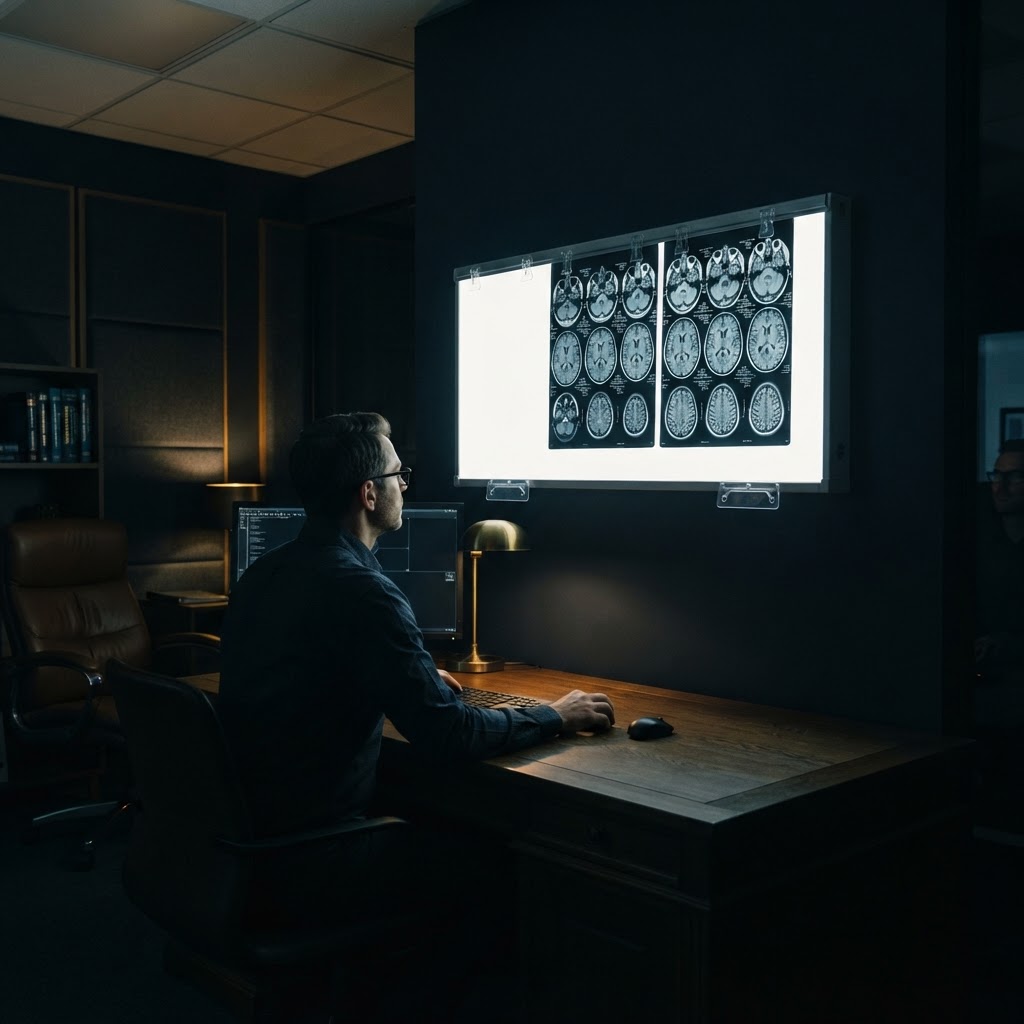
Standard CT and MRI scans often miss microscopic injury to brain tissue. Adjusters frequently point to normal imaging to label a claim as a minor concussion. We work with your doctors to put the imaging in context and, where medically appropriate, pursue testing that measures how your brain is actually functioning.
Invisible symptoms get questioned
Memory problems, fatigue, mood changes, and difficulty focusing do not show up in photographs. Insurers may call them subjective. Consistent medical documentation, testing, and observations from people who know you well can make these changes concrete.
Preexisting conditions become the explanation
If you have a history of headaches, anxiety, depression, or a prior concussion, the defense will likely argue your symptoms came from that history. California law allows recovery when an accident aggravates a prior condition, and we focus the evidence on how your life changed after this injury.
Treatment gaps are read as recovery
If you stopped therapy because of cost, transportation, or confusion caused by the injury itself, an adjuster may treat the gap as proof you got better. We document the reasons for any gap and help you stay connected with appropriate care.
Why it happens
Common causes
Car and rideshare collisions
Rapid acceleration and deceleration can cause the brain to strike the inside of the skull, even without a direct blow to the head, including in rear-end crashes.
Motorcycle crashes
Even with a helmet, riders are vulnerable to head trauma in collisions with vehicles that turn left in front of them or change lanes without looking.
Pedestrian and bicycle collisions
When a vehicle strikes a person on foot or on a bike, the impact with the hood, windshield, or pavement frequently causes head injuries.
Slip, trip, and fall incidents
Wet floors, broken stairs, poor lighting, and uneven sidewalks can cause falls where the head strikes a hard surface.
Falls at construction sites
Falls from ladders, scaffolds, and roofs are a leading cause of brain injuries in the building trades, and third parties may share responsibility.
Assaults due to negligent security
When property owners fail to provide reasonable security at apartments, parking structures, or businesses, violent attacks can cause serious head trauma.
What we see
Injuries we handle
What you may recover
Compensation in a California claim
Medical and rehabilitation costs
Emergency care, neurosurgery, hospitalization, neurology visits, cognitive, speech, and occupational therapy, medications, and the future care your providers recommend.
Lost income and earning capacity
Wages lost while you recover and the long-term effect of cognitive changes on your ability to work, advance in your field, or return to your prior occupation.
Supervision and support services
Home health aides, case management, transportation, and the value of care that family members provide when you can no longer manage safely on your own.
Pain, emotional distress, and loss of enjoyment
Compensation for headaches, anxiety, depression, frustration, and the loss of hobbies, independence, and relationships that the injury has affected.
Loss of consortium
A spouse or registered domestic partner may recover for the loss of companionship and support caused by personality and cognitive changes after a brain injury.
The rules that apply
California law you should know
Two-year statute of limitations
Most brain injury lawsuits must be filed within two years of the injury. Because symptoms can emerge gradually, it is important not to wait for a full diagnosis before speaking with a lawyer.
Cal. Code Civ. Proc. § 335.1
Claims involving government entities
If a public agency is involved, such as a dangerous public road or a government vehicle, a written claim generally must be presented within six months.
Cal. Gov. Code § 911.2
Recovery for all proximately caused harm
California allows compensation for all detriment proximately caused by another's negligence, which includes aggravation of a prior condition and future harm reasonably certain to occur.
Cal. Civ. Code § 3333
General information, not legal advice. Deadlines and rules depend on the facts of your case, so talk to an attorney promptly.
Right now
Protect your claim
Evidence to gather
- Emergency room, ambulance, and imaging records
- Notes from family and coworkers describing changes in your behavior or abilities
- A symptom journal tracking headaches, sleep, memory, and mood
- Neuropsychological testing results and therapy notes
- Photos of the scene and any visible head or facial injuries
- Employment records showing performance before and after the injury
- Helmet, eyeglasses, or other damaged items involved in the impact
- Witness names and statements about loss of consciousness or confusion
Mistakes insurers count on
- Declining emergency evaluation because you feel fine after a blow to the head
- Downplaying symptoms to doctors, employers, or insurance adjusters
- Returning to full activity or work before your doctor clears you
- Letting treatment lapse without documenting why
- Settling before the long-term effects of the injury are understood
Step by step
How we handle your case
- 1
Hear your story and your family's
Brain injuries often affect self-awareness, so we listen to both you and the people closest to you to understand how daily life has changed.
- 2
Secure early medical evidence
We obtain ambulance, emergency room, and imaging records, and document symptoms like confusion, vomiting, or memory gaps that were noted in the first hours.
- 3
Connect the right testing
We work with your treating physicians and, when appropriate, neuropsychologists to evaluate memory, attention, processing speed, and emotional functioning.
- 4
Project long-term needs
For more serious injuries, we coordinate life-care planning and economic analysis so future therapy, support, and lost earnings are documented.
- 5
Present the case the way insurers evaluate it
We prepare a demand that anticipates the defense arguments we used to make. If the insurer will not respond fairly, we are prepared to file suit.
From the Case Vault
Related results
Past results do not guarantee a similar outcome. Every case is different and must be evaluated on its own facts.
Straight answers
Frequently asked questions
Yes. Standard CT scans are designed to detect bleeding and fractures, not the microscopic damage that often causes lasting symptoms after a concussion or diffuse injury. Many people with real cognitive and emotional changes have normal initial imaging. Your doctors may recommend additional evaluation, and neuropsychological testing can help document how the injury affects your thinking and daily functioning.
Catastrophic Injury & Death