The short answer
In California, property owners must maintain safe premises and warn of known hazards. If you are injured by a dangerous condition—like a wet floor, broken step, or inadequate security—you can recover compensation if the owner knew or should have known of the hazard. You generally have two years to file (CCP § 335.1).
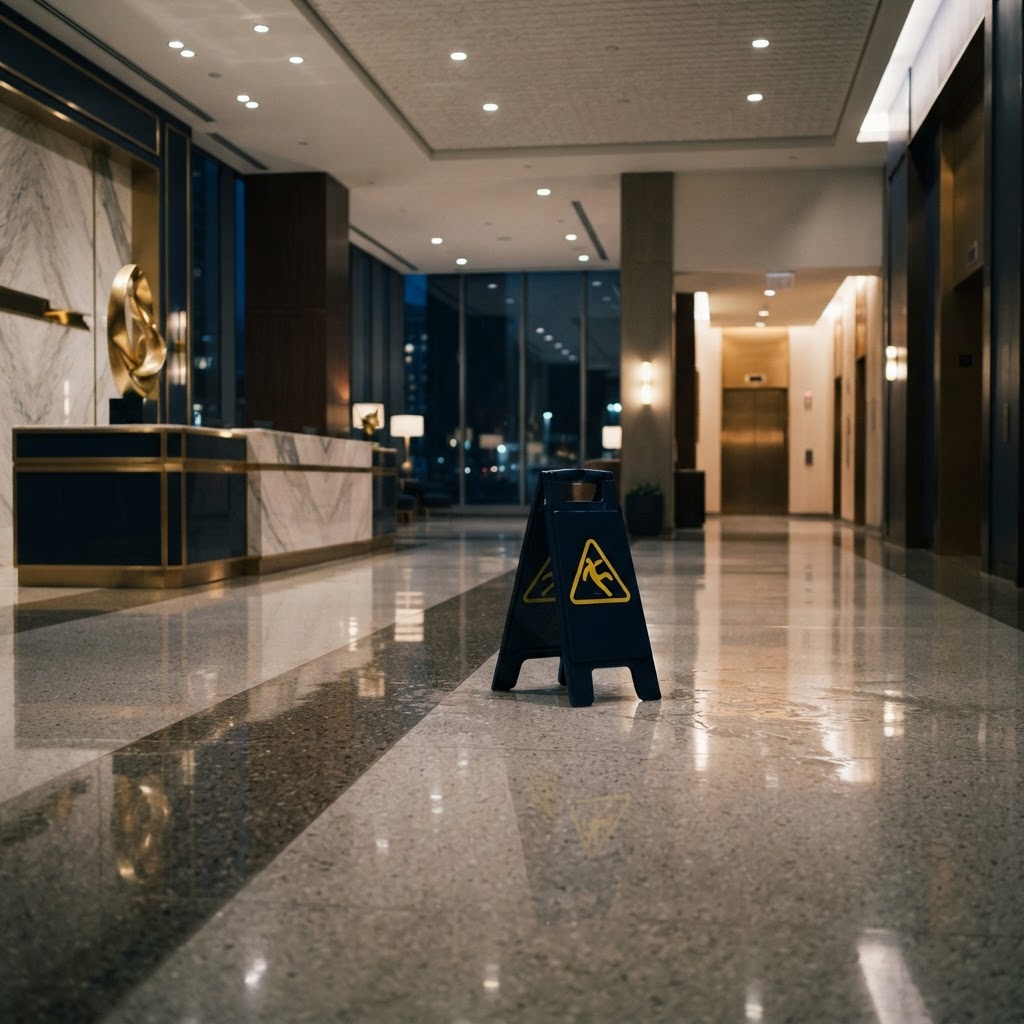
Every property owner and business in California has a legal duty to keep their premises reasonably safe for the people who come onto them. That duty covers the supermarket on Vermont Avenue, the apartment complex in Koreatown, the parking structure at a Westfield mall, the hotel lobby in Downtown, and the private home you visited for a birthday party. When an owner, landlord, or business ignores a dangerous condition and someone is hurt, California law allows the injured person to seek compensation.
Premises liability is not limited to slip and falls. It includes collapsing balconies, broken stair treads, loose handrails, falling merchandise, uncovered holes, poorly lit walkways, unsafe elevators and escalators, and assaults that happen because an owner ignored foreseeable crime. The key questions are usually the same: who controlled the property, what did they know or should they have known about the danger, and what would a reasonable owner have done about it?
Our founding attorneys spent years as personal injury attorneys and in-house for a major insurer. On the defense side, premises cases are often fought on notice, inspection records, and comparative fault. We know which records exist, which ones get 'lost,' and how an adjuster builds the argument that you should have seen the hazard. We use that knowledge to move quickly on evidence and to answer the defense before it takes hold.
Consultations are free, and you pay no attorney's fee unless we recover compensation for you. If you were hurt on someone else's property in Los Angeles County, we can help you understand whether you have a claim and what steps to take next.
From the other side of the table
How the insurer's adjuster sees your premises claim
No notice, no liability
The first defense in most premises cases is that the owner did not know about the hazard. Adjusters ask for inspection logs and sweep sheets, and if the records look clean, they deny. We demand those records, surveillance footage, maintenance tickets, and prior complaints, and we look for evidence that the condition existed long enough that a reasonable inspection would have found it.
Open and obvious
Insurers argue that a hazard was so obvious that you should have avoided it. Even an obvious hazard can create liability when it was foreseeable that people would encounter it anyway, such as a damaged stairway that is the only exit. We document why you could not reasonably avoid the danger.
Who controlled the property
Landlords blame tenants, tenants blame property managers, and property managers blame maintenance contractors. Each has a separate insurer. We identify every entity with ownership, control, or maintenance responsibility so the finger-pointing does not leave you without recovery.
Comparative fault
Adjusters look for anything that shifts blame: your footwear, your phone, lighting you could have turned on, a shortcut you took. We gather witness statements and scene evidence to show what a reasonable person in your position would have experienced.
Why it happens
Common causes
Slip, trip, and fall hazards
Spills, leaks, torn carpet, uneven flooring, and cluttered aisles in stores, restaurants, and office buildings are among the most common premises hazards.
Defective stairs, railings, and balconies
Older apartment buildings in areas like Koreatown, Hollywood, and Mid-Wilshire may have worn stair treads, loose handrails, or deteriorating balconies that owners have not repaired.
Inadequate lighting
Dim parking garages, stairwells, and walkways make hazards invisible and can also invite criminal activity.
Negligent security
When crime on a property is foreseeable, owners may need reasonable measures like lighting, locks, gates, or guards. Failing to provide them can lead to liability for assaults.
Falling objects
Improperly stacked merchandise in big-box stores, loose fixtures, and unsecured construction materials can fall and cause serious injury.
Swimming pool and water hazards
Missing fences, broken gates, and lack of drain covers at apartment and hotel pools can cause drownings and injuries.
What we see
Injuries we handle
What you may recover
Compensation in a California claim
Medical costs
Emergency care, surgery, therapy, and future medical treatment reasonably required because of the injury.
Lost income
Wages and income lost during recovery, plus any reduction in future earning capacity.
Pain and suffering
Compensation for physical pain, emotional distress, and loss of enjoyment of life.
Household and personal care help
Reasonable costs of help with daily activities, home care, and household tasks you cannot perform while injured.
Wrongful death damages
When a dangerous property condition causes a death, eligible family members may pursue damages for the loss of financial support, love, companionship, and funeral expenses.
The rules that apply
California law you should know
Duty of ordinary care
California imposes a general duty to use ordinary care in managing one's property. The California Supreme Court has held that a person's status as invitee, licensee, or trespasser is not controlling; the question is whether the owner acted reasonably in view of the probability of injury.
Cal. Civ. Code § 1714; Rowland v. Christian (1968) 69 Cal.2d 108
Constructive notice
An owner can be liable for a dangerous condition it did not actually know about if it existed long enough that a reasonable inspection would have discovered it.
Ortega v. Kmart Corp. (2001) 26 Cal.4th 1200
Dangerous conditions of public property
Public entities may be liable for dangerous conditions of their property under specific statutory requirements, and a written claim generally must be filed within six months.
Cal. Gov. Code §§ 835, 911.2
Filing deadline for private property
Lawsuits against private property owners generally must be filed within two years of the injury.
Cal. Code Civ. Proc. § 335.1
General information, not legal advice. Deadlines and rules depend on the facts of your case, so talk to an attorney promptly.
Right now
Protect your claim
Evidence to gather
- Photos and video of the hazard before it is cleaned or repaired
- A copy of the incident report you made to the owner or manager
- Names and contact information of employees and witnesses
- Locations of security cameras that may have captured the incident
- The shoes and clothing you were wearing
- Receipts or other proof that you were on the property
- Prior complaints, emails, or repair requests about the condition
- Medical records and bills
Mistakes insurers count on
- Leaving without reporting the incident to the property owner or manager
- Failing to photograph the hazard before it is fixed
- Giving a recorded statement to the property owner's insurer
- Assuming you have no case because the hazard was 'obvious'
- Missing the six-month claim deadline when public property is involved
Step by step
How we handle your case
- 1
Free consultation
We review what happened, where, and who owned or controlled the property, and we explain deadlines, including shorter deadlines for public property.
- 2
Rapid evidence preservation
We send preservation letters for surveillance video, inspection logs, incident reports, and maintenance records, which are often overwritten or discarded quickly.
- 3
Identify responsible parties
We research ownership, leases, management agreements, and maintenance contracts to identify every party with responsibility and insurance.
- 4
Build the notice and damages case
We gather records of prior complaints, repair requests, and similar incidents, and we document your medical treatment and financial losses.
- 5
Negotiate or file suit
We present the claim to the insurers and, if they will not make a fair offer, we are prepared to file a lawsuit.
From the Case Vault
Related results
Past results do not guarantee a similar outcome. Every case is different and must be evaluated on its own facts.
Straight answers
Frequently asked questions
Generally, that the defendant owned, leased, occupied, or controlled the property; that it was negligent in using or maintaining it; that you were harmed; and that the negligence was a substantial factor in causing the harm. In many cases the central fight is whether the owner knew or should have known about the dangerous condition in time to fix it or warn you.
Premises Liability