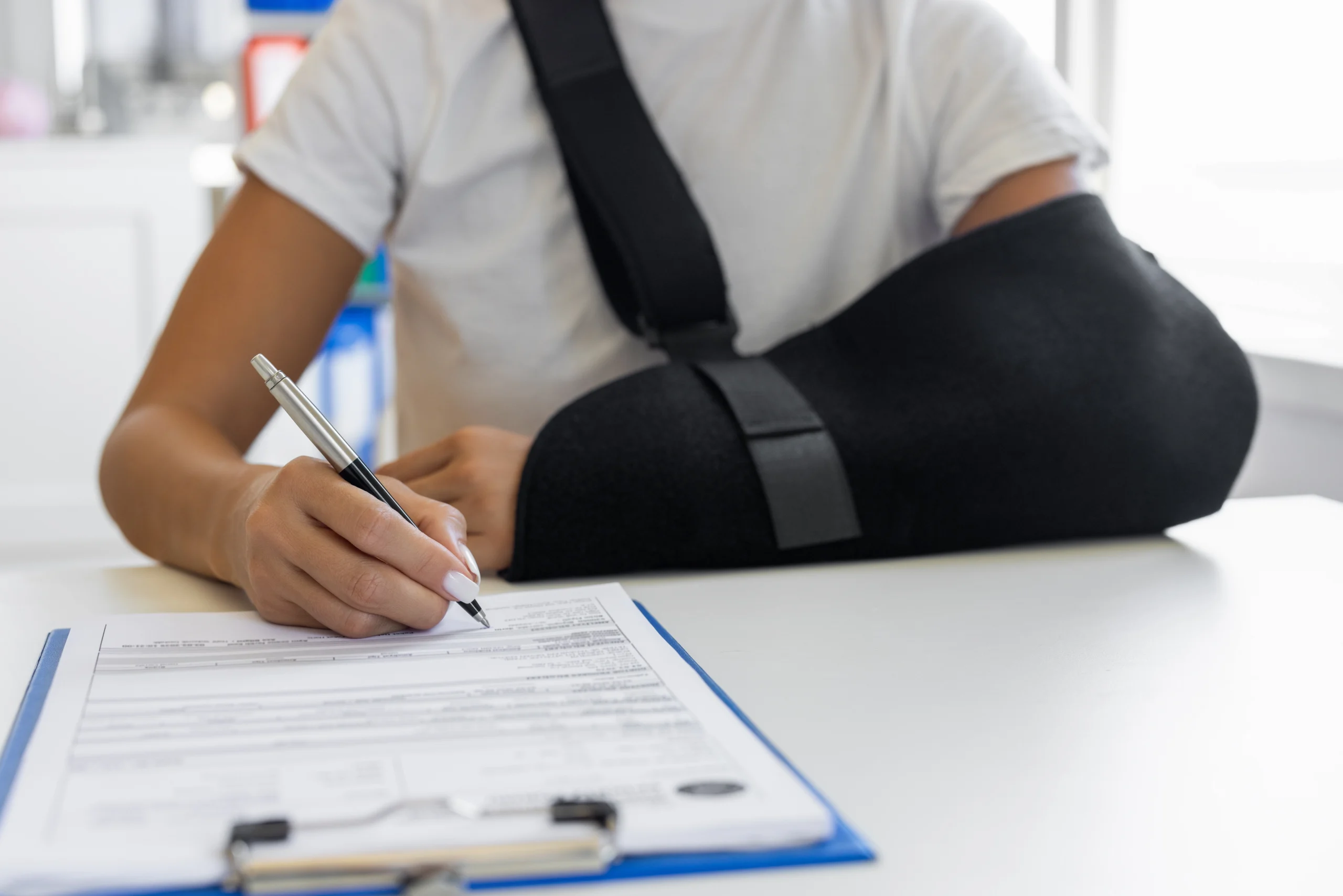
To claim car accident compensation in California, you report the crash, document your injuries and losses, open a claim with the at-fault driver's insurer (and your own, when appropriate), and negotiate a settlement or file a lawsuit within the two-year deadline for injury claims. Compensation can cover medical bills, lost income, property damage, and pain and suffering. The key is building proof early and not treating the insurer's first offer as the full value of your claim.
A crash can turn an ordinary weekday into a stack of paperwork, phone calls, and repair estimates. Meanwhile, you may be dealing with pain, missed work, and a car that is sitting in a tow yard. The insurance company on the other side is not going to hand you a fair amount just because its driver hurt you. Understanding how the process works puts you back in control.
Key Points Before You Start
- You may be able to recover medical expenses, lost wages, property damage, pain and suffering, and other losses tied to the crash.
- Collect photos, medical records, witness details, the police report, and insurance information as early as you can.
- Notify your own insurer promptly, even if the other driver was clearly at fault.
- The first settlement offer is rarely the full value of a claim.
- California generally allows two years to file a personal injury lawsuit, with exceptions.
- Legal help matters most when injuries are serious, fault is disputed, or the insurer will not pay fairly.
How Car Accident Compensation Works
Car accident compensation is money paid to an injured person to make up for losses the collision caused. It may come through an insurance claim, a negotiated settlement, or a lawsuit and verdict.
Everything starts with fault. California injury claims are based on negligence, which means showing that another driver failed to use reasonable care and that this failure caused your injuries. A driver who was texting, speeding, ran a red light, failed to yield, or was impaired has likely breached that duty. If their conduct caused the crash and your injuries, you have the foundation of a claim.
Compensation is not only about your bumper. A serious crash can create costs that continue long after the tow truck leaves: treatment, rehabilitation, missed paychecks, a reduced ability to earn, and the physical and emotional toll of an injury. The California Courts self-help guide notes that personal injury damages can include medical bills, lost wages, ongoing treatment, emotional harm, and future problems caused by an injury.
What Compensation Can Cover
Everyone wants to know what their claim is worth. There is no universal number. Value depends on how badly you were hurt, the insurance available, the strength of the evidence on fault, and how the injuries will affect your future. The main categories are:
Medical expenses
Emergency care, ambulance transport, hospital bills, imaging and diagnostic tests, surgery, physical therapy, medications, follow-up visits, and other reasonable treatment. If you will need care down the road, future medical costs belong in the claim too.
Lost wages and earning capacity
Income you lost while you could not work is recoverable. If your injuries limit what work you can do going forward, the claim may also include diminished earning capacity.
Property damage
The cost to repair or replace your vehicle if it is totaled, along with other personal property damaged in the crash. Rental car costs and loss of use may also be part of this piece of the claim.
Pain and suffering
Not every loss comes with a receipt. Pain, emotional distress, inconvenience, and loss of enjoyment of life are real damages. They are harder to price than a hospital bill, which is exactly why a claim is not simply the total of your invoices.
Future losses
Many crash injuries do not resolve in a few weeks. A traumatic brain injury, spinal injury, or serious fracture may require long-term care and affect your ability to work and enjoy daily life. When the medical evidence supports it, a claim should account for those long-term consequences.
How to Start Your Claim
The process generally begins with reporting the accident and gathering information. The California Department of Insurance recommends notifying your insurer promptly and collecting as much information as possible at the scene. Aim to gather:
- The other driver's name, contact information, and driver's license details
- Their insurance company and policy information
- Vehicle descriptions and license plate numbers
- Names and phone numbers of witnesses
- Photos of the scene, vehicle damage, and visible injuries
- The police report number and, later, the report itself
- Medical records and bills
- Proof of missed work
- Every letter, email, and text from an insurance company
Think of this material as the story of your accident. The more clearly that story can be shown, the easier it is to establish what happened, who was responsible, and how the crash changed your life.
Why Evidence Decides So Many Claims
Your memory matters, but evidence matters more, especially months later when everyone's recollection has faded and a photo from the scene has not. Photos can show where vehicles came to rest, road conditions, signals, skid marks, damage, and injuries. Medical records connect the crash to your injuries. Independent witnesses give accounts that are not tied to either driver.
A police report can be valuable too, but it is not the final word on legal fault. If the report gets something wrong, it can often be challenged with other evidence. For a deeper checklist, see our insider guide to car accident evidence.
If you can do it safely, photograph the scene from several angles, capturing both the overall layout and the small details. Just never step into traffic for a picture. No settlement is worth a second accident.
Talking to Insurance Companies
You will almost always need to deal with insurers after a crash. But there is a difference between reporting an accident and protecting the value of an injury claim.
An adjuster will ask about how the crash happened, your injuries, your treatment, and your losses. Answer truthfully and accurately, but do not guess. If you do not know how fast the other car was going, say so. Do not tell anyone you are "fine" if you have not been checked out; many injuries take hours or days to show symptoms.
Be cautious about recorded statements and about signing anything you do not fully understand, especially authorizations or releases. Here is the insider perspective: our founder, Matthew Nezhad, has fought for injured Californians since founding the firm in 2002. Adjusters are trained to gather statements that limit what the company pays, and a casual comment early on can be quoted back to you later. If your claim involves real injuries, it is wise to talk with an attorney before giving a detailed statement.
When the Insurance Company Makes an Offer
An early offer can look tempting, particularly when bills are piling up and you want this behind you. Before you say yes, understand what the offer actually covers.
A settlement usually ends your claim permanently. Once you sign a release and accept payment, you generally cannot go back for more, even if your treatment turns out to be longer or more expensive than anyone expected. That is why it is important to understand the full extent of your injuries and future needs before settling. An attorney can review the offer, investigate the crash, calculate the full damages, and negotiate. And if the insurer refuses to pay at all, our guide on challenging a denied car accident claim walks through the next steps.
If the Other Driver Does Not Have Enough Insurance
Not every driver on California roads carries enough coverage, and some carry none. The Insurance Information Institute estimated that roughly one in six California drivers was uninsured in 2022.
Suppose your injuries lead to $100,000 in medical bills and other losses, but the at-fault driver's policy limit is far lower. That does not automatically cap your recovery at their policy limit. Your own uninsured and underinsured motorist (UM/UIM) coverage may make up some or all of the difference, and other parties who share responsibility may have their own insurance. Our guide to uninsured driver collisions explains how these claims work.
Can You Recover If You Were Partly at Fault?
Often, yes. Crashes are rarely as simple as one good driver and one bad driver. California uses comparative negligence, which means fault can be divided among everyone involved. If you are found partly responsible, you do not automatically lose your claim; your compensation is reduced by your share of fault.
That is exactly why insurers like to argue that injured drivers share the blame. Every percentage point they assign to you reduces what they pay. If an adjuster says you were partly responsible, do not simply accept it. The evidence deserves a careful look.
Deadlines for Car Accident Claims in California
Missing a filing deadline can end your right to go to court. In California, the general statute of limitations for a personal injury lawsuit is two years from the date of injury, and property damage claims generally have three years. There are exceptions. Claims against government agencies, such as a city bus or a dangerous road condition, typically require a formal claim within a much shorter time.
Do not assume you have plenty of time. Investigation, records, and negotiations all take months. Speaking with a lawyer early helps you understand exactly which deadlines apply to you.
When to Hire a Car Accident Lawyer
Not every fender bender needs an attorney. But legal help becomes especially valuable when:
- Your injuries are serious or long-lasting
- Your losses are significant
- Fault is disputed or unclear
- More than one driver or business may be responsible
- Insurance coverage is limited or complicated
- The insurer is delaying, denying, or lowballing
A car accident lawyer can investigate, gather evidence, handle insurer communications, calculate damages, negotiate a settlement, and take the case to court if needed, so you can focus on getting better.
Mistakes to Avoid
Oversharing on social media
Posts about the accident, your injuries, or your activities can be taken out of context and used to argue you are not really hurt. When in doubt, stay off social media until your claim is resolved. Assume anything you post will be read by the adjuster.
Exaggerating your injuries
Be completely honest with your doctors and your lawyer. You do not need to make things sound worse. You need to accurately document how the injuries affect your life.
Skipping treatment
Follow your doctor's recommendations. Gaps in care and missed appointments give insurers an easy argument that you were not seriously hurt.
Letting yourself be worn down
Delay is a common insurer tactic, and claim fatigue is real. Settlement is a major decision, so make sure you understand what you are giving up before you sign.
Waiting until a deadline is close
A lawyer needs time to investigate, collect records, locate witnesses, and review coverage. Starting early is far better than discovering a deadline at the last minute.
What You Take Home From a Settlement
The gross settlement amount is usually not what lands in your pocket. Attorney's fees, case costs, and medical liens (for example, from health insurers or providers who treated you on a lien) are typically paid from the settlement first. A good lawyer will explain these deductions up front and often works to reduce liens so more of the recovery goes to you.
Talk to Oaks Law Firm
After a crash, you should not have to become an overnight expert in insurance policies, medical billing, fault rules, and civil procedure. Our team knows how insurance companies investigate and value claims from the inside, and we know the first number on the table is rarely what a claim is worth. We are based at 15233 Ventura Blvd, 5th Floor, in Koreatown and Central Los Angeles and help injured people across California.
If you were hurt in a car accident, contact us for a free case review or call (818) 392-5411. You pay no attorney's fee unless we recover compensation for you.