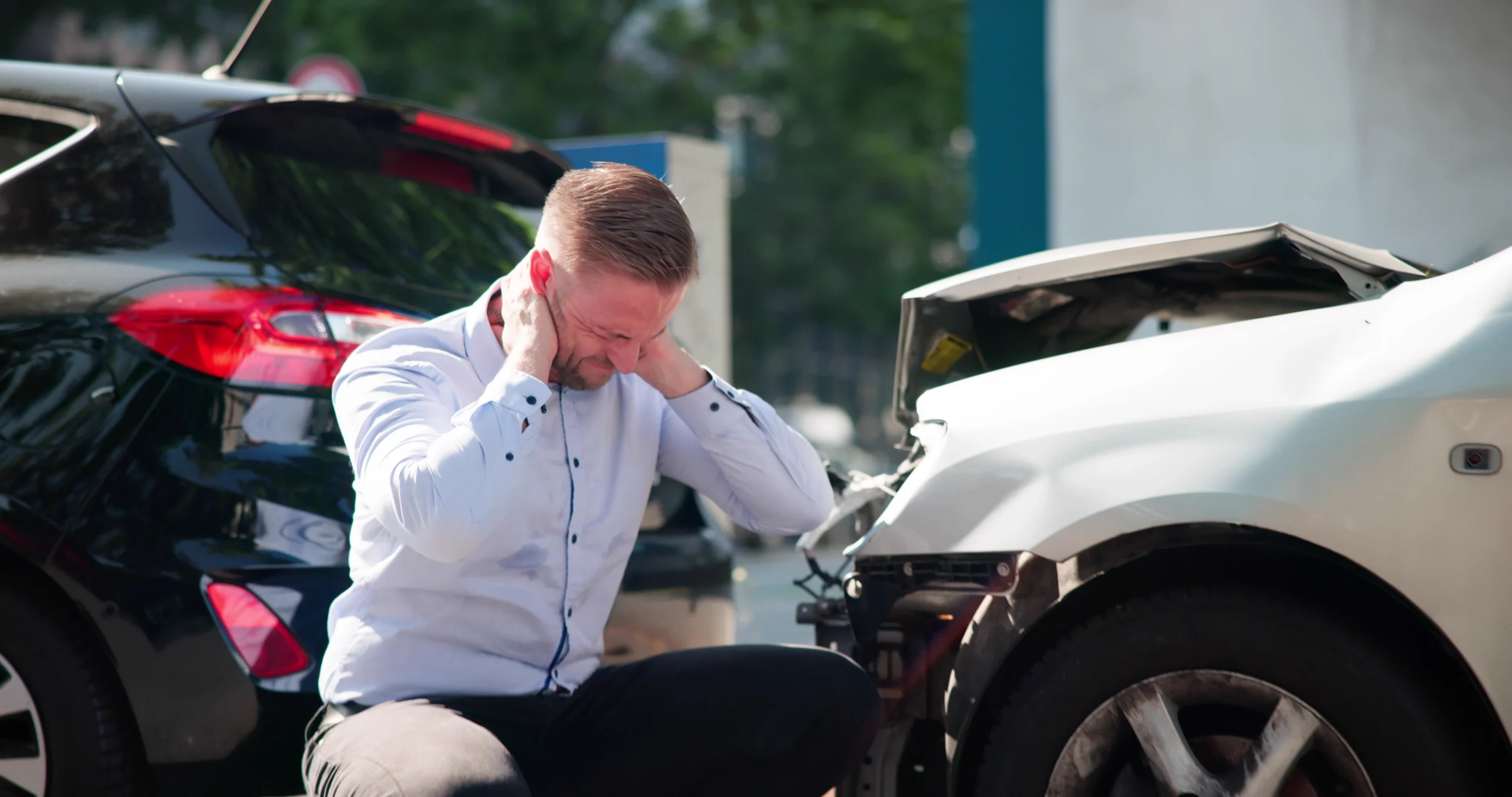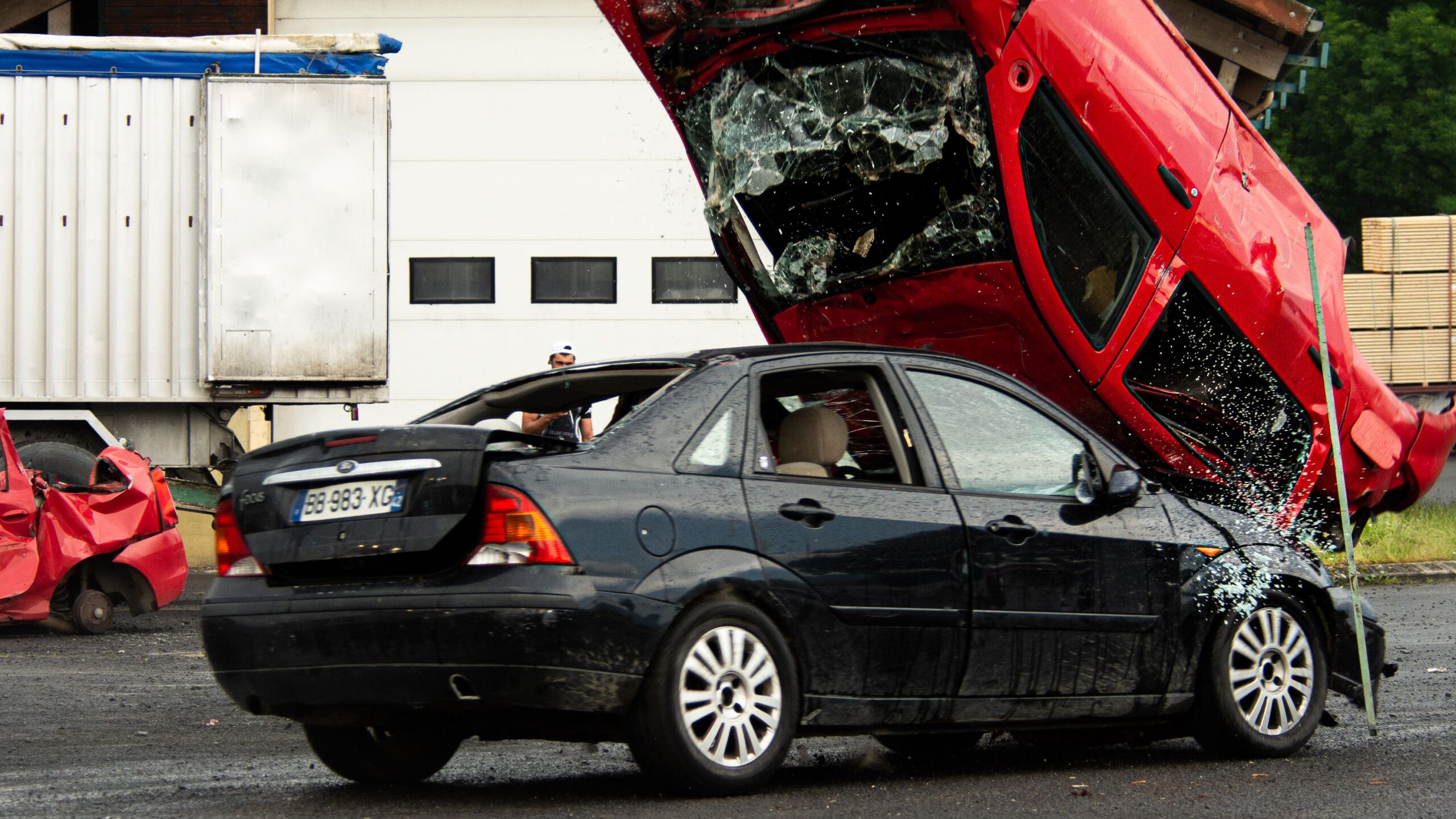
In a California multi-car pileup, fault is determined by breaking the crash into individual collisions and asking, for each one, which driver failed to act with reasonable care. Investigators look at the order of impacts, following distance, speed for the conditions, sudden braking or lane changes, distraction or impairment, and vehicle defects. Because California uses pure comparative negligence, fault is often split among several drivers, and each person's recovery is reduced by their own share.
Consider what happened on State Route 99 near Delano one Saturday morning. Traffic was moving normally until fog cut visibility to under 200 feet. Within minutes, 59 vehicles were tangled together in both directions. Almost no one caught in it could have said, in that moment, whose fault any of it was. That is the reality of a pileup: not one crash, but many collisions stacked on top of each other in seconds, followed by a crowd of insurance companies each pointing at someone else.
What Counts as a Multi-Car Pileup?
A pileup is generally a crash involving three or more vehicles, usually set off when one collision triggers a chain of additional impacts. The California Vehicle Code does not define the term. A CHP collision report simply lists the number of vehicles and the type of impact, such as rear-end or sideswipe.
In practice, three vehicles is the tipping point. Once a third car is involved, adjusters and investigators stop comparing two drivers and start analyzing a sequence. It also helps to separate two kinds of multi-vehicle crashes:
- Chain-reaction pileups, where one impact physically pushes vehicles into the next ones.
- Simultaneous multi-vehicle collisions, where several cars converge at roughly the same time, often at an intersection.
Investigators approach these differently, as explained below.
Where California Pileups Tend to Happen
- Fog corridors. Stretches of State Route 99 and Interstate 5 in the Central Valley are known for tule fog that can reduce visibility to a few dozen feet with little warning.
- Los Angeles freeway interchanges. The 405, 101, and 5 regularly slow to stop-and-go, leaving little margin for error.
- Sudden slowdowns. One hard brake near an on-ramp or lane closure can ripple backward through dense traffic faster than trailing drivers can react.
- The first rain after a dry spell. Oil builds up on the pavement during long dry periods, so early-season rain makes roads slicker than drivers expect and stopping distances longer.
The Legal Framework: Pure Comparative Negligence
Everything in a pileup case is measured against California's pure comparative negligence rule. Two principles follow from it:
- More than one driver can share responsibility for the same crash.
- Being partly at fault does not bar you from recovering. Your compensation is reduced by your percentage of fault.
If you are found 20% responsible, you can still recover 80% of your damages from the other at-fault parties. In pileups, this matters constantly, because it is unusual for a single driver to carry all the blame. The tailgater, the driver who braked for no reason, and the driver checking a phone may each be assigned a different percentage for the same chain of events.
Six Factors That Decide Liability in a Pileup
Investigators and adjusters treat a pileup as a series of links in a chain and ask the same negligence questions about each driver: What duty did this driver owe? Did they breach it? Did that breach cause the harm in question? These six factors drive the answers.
1. The Order of Impacts
The first question is almost always sequence: which collision happened first, and which vehicles were struck or pushed as a result? The driver who caused the first impact often carries a large share of responsibility for what follows, including damage to vehicles their car never touched.
Imagine a distracted driver in a heavy pickup rear-ending a compact car on the I-10 near Downtown LA, pushing it into a delivery van. The pickup driver can be responsible for both impacts, since neither would have happened without the initial mistake. But sequence is a starting point, not the end of the analysis. A driver who was pushed forward isn't automatically blameless if following too closely made their own collision worse.
2. Following Distance and the Rear-End Presumption
California Vehicle Code section 21703 requires drivers to follow no more closely than is "reasonable and prudent" given speed, traffic, and road conditions. The California Driver's Handbook recommends a three-second following distance, but the statute doesn't set a fixed number. The question is what a careful driver would have done in those conditions.
When one car rear-ends another, that is generally treated as evidence the following driver violated section 21703, which supports a presumption of negligence. In a pileup, many of the individual impacts are technically rear-end collisions, so this presumption comes up often. It can be rebutted, though. A driver who was violently shoved into the car ahead by a speeding tailgater is in a very different position from one who simply wasn't paying attention.
3. Speed for the Conditions
California's basic speed law, Vehicle Code section 22350, requires drivers to go no faster than is safe for conditions, which can be well below the posted limit in fog, heavy rain, or dense traffic. Driving 65 mph over the Grapevine in a downpour, or 55 mph through tule fog with 20 feet of visibility, can violate the law even if the speedometer never passed the posted limit. If a driver couldn't stop in time because of the conditions, their speed was likely unsafe.
4. Sudden Braking and Unsafe Lane Changes
Sometimes the trigger isn't a tailgater but a lead driver who braked hard for no good reason, cut across lanes without signaling, or forced their way into a gap that wasn't there. Picture a driver swerving across three lanes of the 101 to make a last-second exit, forcing the car behind to brake hard and setting off a five-car chain. Even if that driver exits without a scratch, they can carry a large share of the fault. These "cut-off" claims are hard to prove without dashcam video or reliable witnesses, so they are frequently disputed. Our firm has handled disputed lane-change cases, including a $750,000 result in a disputed freeway lane change ($250k policy limits + $500k UIM).
5. Distraction, Impairment, and Traffic Violations
Phone records, breath or blood test results, and CHP citations issued at the scene heavily influence how fault is divided. A driver who was texting, impaired, or committing a moving violation just before the impact will usually take on a bigger share. Consider a three-car chain on Pacific Coast Highway where the middle driver looks like a victim pushed into the lead car. If phone records show they were typing a message when the crash began, they may absorb part of the fault for failing to react.
6. Vehicle Defects and Road Hazards
Occasionally the root cause isn't driver behavior. Worn brakes, a blown tire, a mechanical failure, or debris on the road can contribute. When a commercial truck is involved, the analysis widens. If a loaded big rig loses its brakes on a downgrade because of poor maintenance and plows into stopped traffic, the trucking company or cargo loader may face liability beyond the driver's, including negligence or product liability claims.
How Fault Plays Out in Common Pileup Scenarios
Rear-End Chain Reactions
Picture rush hour on the southbound 405. One driver glances at a text and taps the car ahead, which is pushed into a third car, and so on down the line. Each link is essentially its own rear-end crash, so the investigation focuses on who started it and which trailing drivers were following too closely or going too fast. Our page on rear-end collisions explains how these claims work.
Fog and Weather Pileups
In one 17-vehicle pileup on Highway 99 in Fresno, tule fog cut visibility to 10 to 15 feet. In crashes like that, investigators ask more than who hit whom. Were drivers going far too fast for the visibility? Were they using low beams (high beams reflect off fog and blind others)? Should they have pulled completely off the road?
Multi-Vehicle Intersection Crashes
When several cars collide at a busy intersection, the case becomes a right-of-way dispute. Investigators focus on signal timing: who had the green, who tried to beat a yellow, who failed to yield on a left turn. Because impacts come from several directions at once, fault is often shared.
Sudden-Stop Freeway Pileups
These start when one driver brakes hard without warning, perhaps panicking near an on-ramp or illegally crossing double white lines to reach a carpool exit. Trailing drivers who followed too closely usually bear fault for their rear-end impacts, but the driver who created the hazard can take on a large share as well.
How Investigators Reconstruct a Chain-Reaction Crash
- Secure the scene. CHP or local police treat injuries and manage traffic before gathering evidence.
- Record final vehicle positions. Officers photograph and map where each vehicle came to rest, which helps establish the order of impacts.
- Take statements. Drivers, passengers, and witnesses are interviewed, though most people remember only fragments of a fast-moving pileup.
- Collect physical and electronic evidence. Paint transfer and crush angles help confirm who struck whom. Vehicle event data recorders can show speed and braking, and dashcam and Caltrans camera footage can fill in gaps.
- Build the timeline. Skid marks (or their absence), phone records, and weather data help create a second-by-second sequence. In disputed cases, an accident reconstruction analyst may model the physics of the crash.
- Issue the collision report. The CHP report is important, but it is only one piece of evidence insurers consider. It is not the final word on fault, and if it contains errors, they can be challenged; see our tips on dealing with a wrong police report.
Timing matters. Caltrans camera footage can be overwritten and vehicle data can be lost within days, so preserving evidence immediately is critical.
What to Do After a Pileup to Protect Your Claim
The minutes and days after a chain-reaction crash are chaotic, but a few steps can make a significant difference in how fault is assigned later:
- Get to safety first. Pileups often grow as more cars arrive, especially in fog. If you can safely leave your vehicle and move well away from traffic, do so.
- Call 911 and get checked out. Whiplash, concussions, and internal injuries are common in multi-impact crashes and may not be obvious right away. Prompt medical records also link your injuries to the crash.
- Note how many times you were hit. Were you struck once or twice? From behind, the side, or both? Did you hit the car ahead before or after being hit? Write this down as soon as you can, because these details fade quickly and matter a great deal.
- Photograph the scene. Capture where vehicles ended up, damage to the front and rear of your car, skid marks, road conditions, and visibility.
- Collect names, plates, and insurance information from the drivers around you, and contact information from witnesses who stopped.
- Save your dashcam footage immediately, before it loops over, and note any businesses or traffic cameras that may have recorded the crash.
- Be careful with adjusters. You may hear from several insurers. Avoid guessing about speeds or distances, and don't agree to a recorded statement until you understand how it could be used to assign fault.
When Several Drivers Share Limited Insurance
Pileups raise a problem that two-car crashes rarely do: many injured people may be making claims against the same driver's policy. If the driver who started the chain carries only California's minimum bodily injury limits of $30,000 per person and $60,000 per accident, that money may be divided among several injured people and run out quickly.
That is why identifying every responsible party matters. A second or third driver who shares fault brings another policy into the picture. A commercial vehicle usually carries much higher limits. And your own underinsured motorist coverage may help cover the gap when the at-fault drivers' coverage isn't enough. For more on that, see our guide to an uninsured or underinsured driver collision.
What Insurers Do in Pileup Claims
A two-car crash involves two insurers. A pileup can involve many, and every one of them benefits when more fault lands on someone else's driver. Because California allows fault to be divided by percentage, each carrier has a financial incentive to shift blame, including onto you.
Our founding attorney has fought insurers for injured Californians since 2002. In practice, that means locking down disappearing digital evidence quickly, identifying every party who may be liable, and pushing back on fault percentages the evidence doesn't support.
If you were hurt in a chain-reaction crash anywhere in Los Angeles or California, contact Oaks Law Firm for a free case review, or learn more about our car accident practice. You pay no attorney's fee unless we recover compensation for you.